

What a Surf Lesson Costs in Portugal: Real 2026 Prices

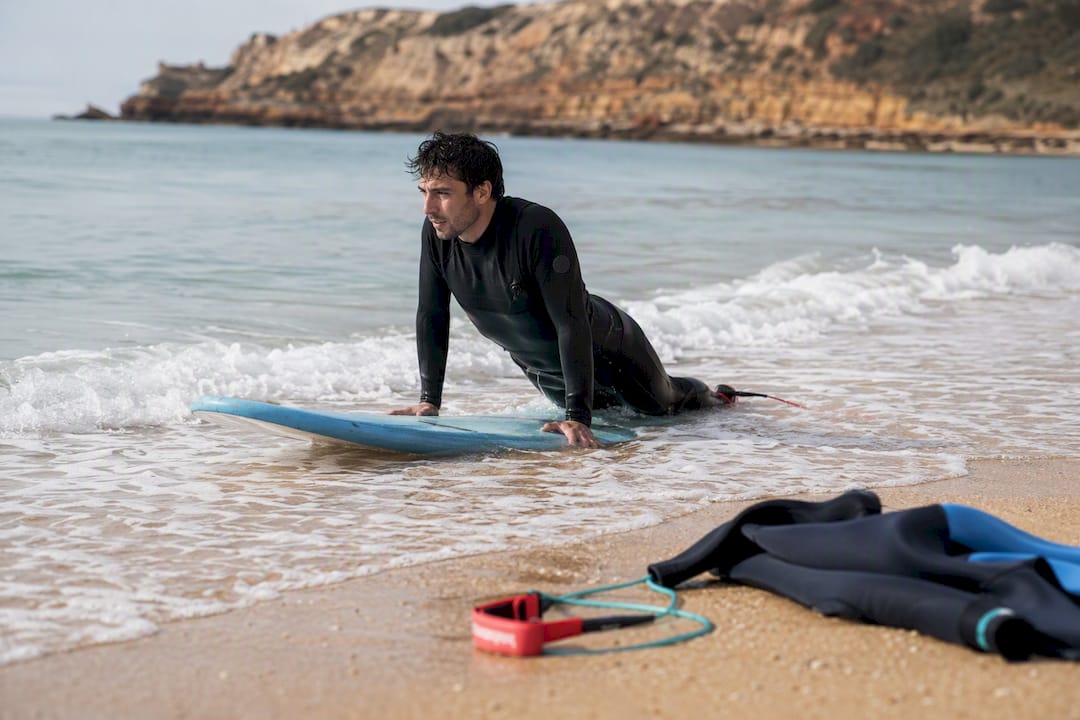
Expect to pay roughly €25 to €50 per person for a group surf lesson in Portugal, and €50 to €120 for a private one. That’s the range you’ll find across most reputable schools, backed by a national survey via Deco Proteste, which puts group lessons between €15 and €60 and private sessions typically around €50 (with a spread up to €150 in high-demand spots).
Group lessons: €25–€50 per person
Private lessons: €50–€120, sometimes more with a specialized coach
Packs (5 or 10 lessons): often cut the per-lesson price by 20–40%
Pro Tip: A quoted price that looks too low compared to everything else usually means the wetsuit or board isn’t included. Always ask before you book. Peniche and the Algarve tend to sit at the higher end of these bands, while most quotes include board, wetsuit, and basic insurance as standard.
Key Takeaways
Fair surf lesson pricing in Portugal depends less on the headline number and more on whether equipment, insurance, and instructor ratio are clearly included.
Point | Details |
Group lesson range | Expect €25–€50 per person for a standard 1.5 to 2 hour group lesson. |
Private lesson range | Private sessions typically run €50–€120 depending on instructor and location. |
Packs cut costs | 5 or 10-lesson packs commonly lower the per-lesson price by 20–40%. |
Region and season shift price | Peniche and the Algarve trend higher, and peak summer months add a premium. |
Ripar Surf School’s approach | Ripar bundles equipment and insurance into group, private, and pack pricing with online booking near Peniche since 2001. |
Table of Contents
How Much Does a Surf Lesson Cost by Type?
Before comparing quotes, you need to know what you’re actually comparing. A “lesson” in Portugal isn’t a fixed unit. Some schools sell 60 minute sessions, others run 90 or 120 minutes, and the price per person shifts accordingly. A €30 lesson that lasts an hour is not the same deal as a €35 lesson that runs two hours with a smaller group.
Here’s roughly how the market breaks down, drawing on aggregated listings from Yumping and the Deco Proteste survey:
Group lessons (1.5–2 hours): €25–€50 per person, with many schools advertising “from €25” for beginner sessions in less touristy spots
Private lessons: €50–€120+, depending on the instructor’s experience and how in-demand the beach is
Kids and family rates: often discounted per child when booked as a group, though family-specific pricing varies by school
Marketplace average: Yumping’s own aggregate across 86 listed offers comes out to around €56, which tracks with the middle of the group-to-private spectrum
Instructor ratio matters more than most beginners realize. A school running 1 instructor to 6 students can charge less per head than one running 1 to 10, but you’ll get noticeably more water time and correction per wave. If a group class costs €30 with a 1:10 ratio and another costs €40 with a 1:5 ratio, the second is often the better value once you account for how many waves you’ll actually catch. Do the math on attention per euro, not just the sticker price.
Duration compounds this. A 90 minute group lesson at €35 works out to roughly €23 per hour. A 60 minute lesson at €28 is closer to €28 per hour. Always convert to a per-hour figure before deciding which quote is genuinely cheaper.
Why Do Prices Vary by Region and Season in Portugal?
Location changes the math more than almost anything else. Peniche and Ericeira, both world-renowned surf destinations, tend to sit toward the higher end of the national range because demand is constant and instructor talent is concentrated there. Lisbon and Cascais beaches, closer to the capital, often price similarly or slightly above regional averages.
Carcavelos: group lessons frequently start around €20–€25 per hour
Peniche and Ericeira: typically start higher, reflecting reputation and instructor demand
Algarve: comparable to Peniche in peak months, cheaper in shoulder season
Madeira and the Azores: less price data available publicly, but expect premiums tied to travel logistics and shorter surf seasons
Seasonality adds another layer. Local surf camp pricing pages show clear low, medium, and high-season tiers, with peak summer months commanding noticeably higher rates than autumn or winter. Portugal’s tourism patterns, tracked by Turismo de Portugal, concentrate visitors heavily between June and September, and that demand curve shows up directly in surf lesson pricing.
What’s Usually Included in the Price?
Most reputable schools bundle the essentials into the lesson price, but the details vary enough to catch out anyone comparing quotes on price alone.
Surf board rented for the session, matched to your skill level
Wetsuit, sized appropriately, especially important outside summer months
Certified instructor, ideally accredited through the Portuguese surf federation
Basic insurance, though coverage details differ by school
What often costs extra:
Photo or video packages of your session
Airport or hotel transfers
Extended equipment rental beyond the lesson window
Pro Tip: Don’t assume insurance means the same thing everywhere. Ask specifically whether it covers water rescue or accident costs, and confirm your board and wetsuit size will actually be available before you show up. A beginner’s guide to Portuguese surf lessons covers session structure in more detail if you want the full picture before booking.
Are Multi-Lesson Packs Worth the Money?
Packs are the single most reliable way to lower your per-lesson cost, and nearly every established school in Portugal offers them.
Typical pack sizes: 3, 5, 10, or 15 lessons
Typical savings: 20–40% off the single-lesson rate, often bundled with equipment and insurance already included
Sample math: a single lesson at €40 versus a 10-lesson pack at €320 works out to €32 per lesson, a 20% saving over paying one at a time
That saving compounds with progression. Pack pricing generally reflects instructor time and equipment costs spread across more sessions, and schools use it to encourage the kind of consistent practice that actually builds surfing skill. If you’re in Portugal for a single weekend trying surfing once, a pack makes no sense. But if you’re staying a week or longer and want to go from standing shakily to catching your own waves, a 5 or 10-lesson pack is almost always the better buy. A surf-camp trip budgeting guide can help you work out where lessons fit into a longer stay.
How Do You Choose Between Group, Private, and a Pack?
Run through this before you book anything:
What’s your actual goal? Trying surfing once, or building real skill over a week?
How long do you want each session to run: 60, 90, or 120 minutes?
Do you want a smaller instructor ratio for faster progress, or is a bigger group fine?
Are you traveling with kids or as a family group?
Is it peak season, when both prices and availability tighten up?
Ask every school these questions before handing over money:
Is equipment (board, wetsuit) included in the quoted price?
What’s the instructor-to-student ratio, and are instructors federation-certified?
What’s the cancellation policy if weather turns?
Does insurance cover water rescue or accidents, and what’s excluded?
Pro Tip: Treat an unusually cheap quote with no inclusions listed as a red flag, not a bargain. The same goes for vague answers about safety policy. A school that can’t clearly state its cancellation terms probably hasn’t thought through worse scenarios either. Details on instructor credentials are covered in this guide to surf instructor essentials.
How Does Ripar Surf School Structure Its Pricing?
Ripar Surf School has run lessons from Praia Areia Branca, near Peniche, since 2001. That’s more than two decades of teaching in one of Portugal’s most consistent surf regions, with instructors certified locally and familiar with the beach’s specific conditions season to season.
Lessons and packs at Ripar include equipment and insurance as standard, and booking runs through a straightforward online system rather than back-and-forth emails. That matches exactly the value signals worth looking for: clear inclusions, no guessing about what you’re paying for, and a fair price tied to real instructor experience rather than a marketing discount.
The structure lines up with what the pricing data across this guide points to: schools that bundle board, wetsuit, and insurance into a transparent rate, and that offer meaningful savings on packs, tend to represent the better long-term value even when the headline number isn’t the cheapest on the beach.
What This Pricing Guide Gets Right (and Where Other Advice Falls Short)
Most pricing guides for surf lessons treat every euro figure as directly comparable, which is the biggest mistake a first-time booker can make. A €25 group lesson and a €45 group lesson aren’t competing offers if one runs 60 minutes with ten students and the other runs 90 minutes with five. The conventional advice to “shop around for the cheapest lesson” ignores that the real variable is attention per wave, not price per session.
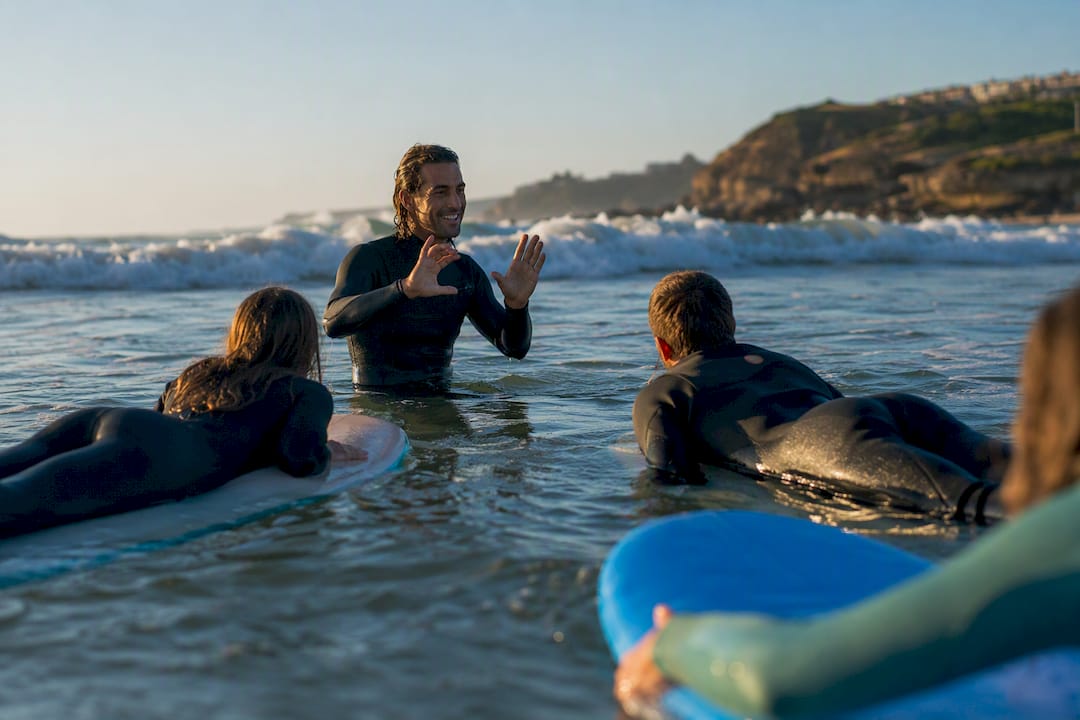
What the research actually supports is prioritizing inclusions and instructor ratio before price. A school listing board, wetsuit, and insurance upfront is telling you something the cheaper competitor without a clear list isn’t. Packs deserve more attention than most guides give them. It reflects real cost amortization on the school’s end, and it rewards the exact behavior, consistent practice, that actually improves your surfing.
If you’re booking your first lesson in Portugal, spend less time hunting for the absolute lowest number and more time confirming what’s included. That’s where the real savings and the real safety differences live.
Ready to Book Your Surf Lesson in Portugal?
If you’ve been comparing quotes across Peniche, Ericeira, and the Algarve, you already know prices swing widely depending on what’s actually bundled in. Ripar Surf School keeps that simple: every lesson and pack includes board, wetsuit, and insurance, taught by local instructors who’ve worked these breaks near Praia Areia Branca since 2001.
Whether you want a group lesson to start out with others at your level or a private lesson for faster one-on-one progress, you can check dates and pricing directly through the online booking page in a few minutes. Packs are available for anyone staying long enough to build real skill, and the same inclusions apply whether you book one session or ten.
Frequently Asked Questions
What is a fair price for a surf lesson in Portugal? A fair group lesson price sits between €25 and €50 per person for a 1.5 to 2 hour session with board, wetsuit, and basic insurance included. Private lessons fairly priced at €50 to €120 depending on instructor experience and location.
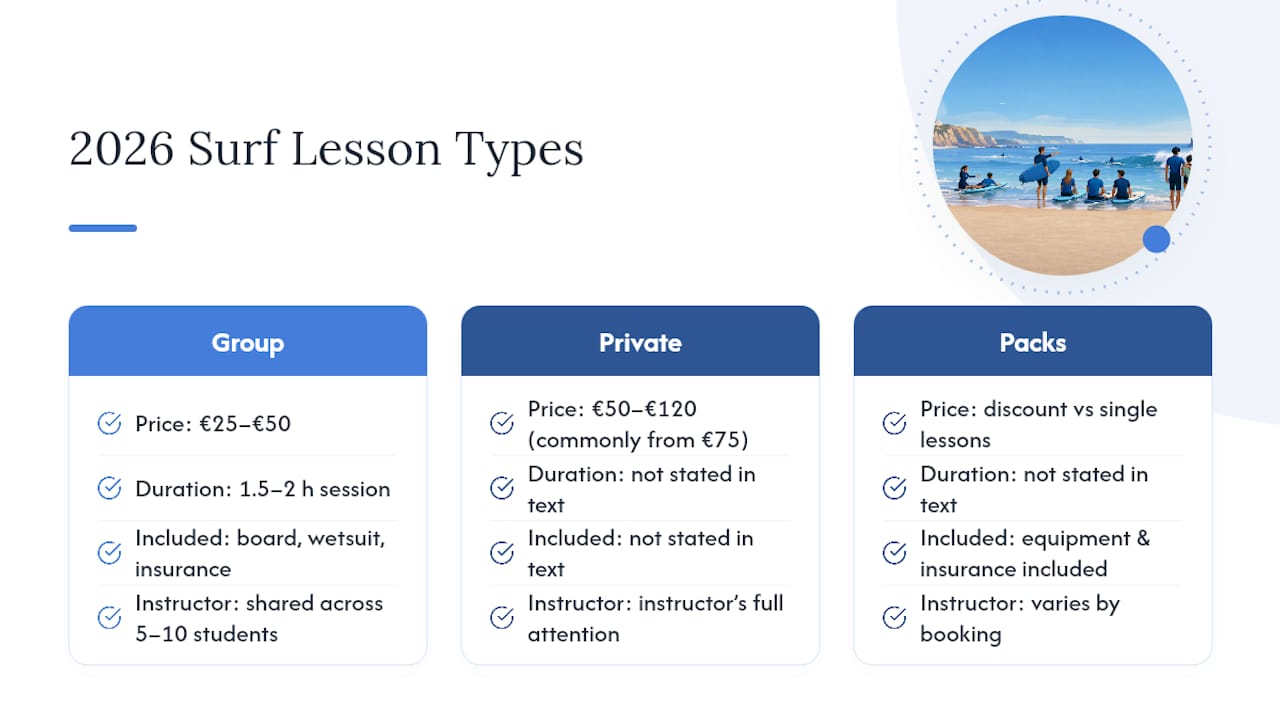
Why do private surf lessons cost so much more than group lessons? You’re paying for the instructor’s full attention rather than sharing it across five or ten students. That translates into faster correction of your technique and more waves caught per session, which is why private rates commonly start around €75 and climb from there.
Do surf lesson packs actually save money? Yes. Packs also tend to include equipment and insurance as standard, adding value beyond the discount itself.
Is surf lesson pricing different in Peniche compared to other regions? Peniche and Ericeira generally price toward the higher end of the national range because of strong year-round demand and concentrated instructor talent, while beaches like Carcavelos near Lisbon often start lower.
What should I check before booking a cheap surf lesson? Confirm whether the board, wetsuit, and insurance are included in the quoted price. A very low rate with no inclusions listed usually means you’ll pay extra for equipment once you arrive.
Sources
Recommended
Comments