

September to November: Portugal's Best Time to Surf and Ripar's Picks

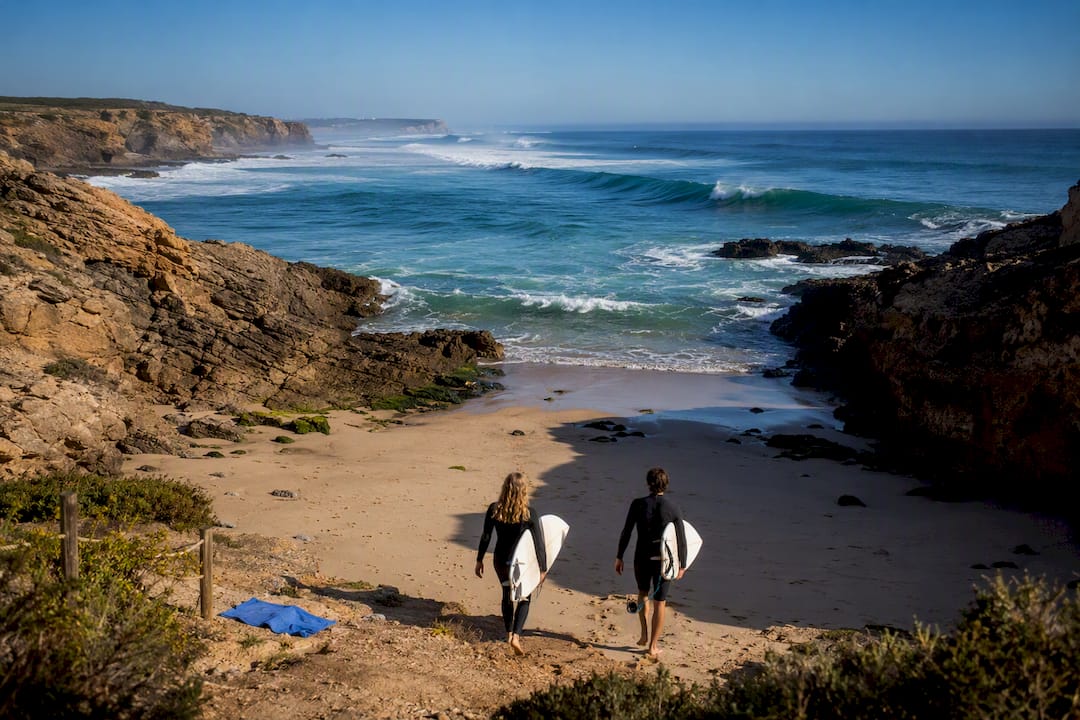
September through November delivers the best surf in Portugal for most skill levels, combining clean groundswell, water still warm from summer, and thinner crowds than peak season. Winter (December to February) rewards advanced surfers chasing bigger, more powerful swells, while summer (June to August) stays the easiest window for beginners thanks to smaller waves and the warmest water. The north runs colder and heavier; the Algarve stays milder and more forgiving.
TL;DR:
Autumn, particularly October, offers consistent swell averaging 1.5 to 2.5 meters, warm water around 18 to 19°C, and fewer crowds, making it ideal for most surfers.
The north coast peaks in autumn and winter with powerful swells over 2 meters and water temperatures dropping to 13 to 15°C, suited for advanced surfers craving big-wave conditions.
The Silver Coast provides the most reliable surfing all year, with best conditions from October through February, especially at Ericeira’s reef breaks and Peniche’s forgiving beaches.
Summer offers small, windswept waves perfect for beginners, with water temperatures up to 23°C and the highest crowds at popular spots like Peniche and Ericeira.
Planning around tides and weather forecasts is crucial; offshore winds in the mornings produce cleaner conditions, and advance booking is recommended for prime autumn travel periods.
Table of Contents
Melhor Época Surf Portugal: What Each Season Actually Delivers
Portugal’s Atlantic coast never really shuts down, but conditions shift enough between seasons that picking the right window changes the entire trip. Here’s what you’re actually walking into, month by month.
Summer (June to August): Windswell dominates, keeping waves small, around 0.5 to 1.5 meters at most beach breaks. Water temperatures peak, and crowds reach their highest levels, especially at Peniche and Ericeira. This is prime territory for beginners and surf schools, since forgiving waves and long days make for easy learning conditions.
Autumn (September to November): The first real groundswells of the year arrive, averaging 1.5 to 2.5 meters, often with clean offshore mornings before the wind picks up. Water stays warmish from the summer, and this stretch is where The Portugal Guides points to October specifically as a standout, with average swell in that 1.5 to 2.5-meter range and water still sitting around 18 to 19°C on the Silver Coast.
Winter (December to February): Groundswells turn powerful and frequent, regularly running 2 to 5 meters at exposed breaks. Water temperatures drop and wind strengthens, making this period suited for experienced surfers and big-wave events.
Spring (March to May): A transitional stretch. Swell quality improves as winter storms fade, crowds thin out, and travel costs drop. It suits intermediates looking to build skills without fighting either crowds or hazardous size.
Multiple travel guides, including Red Bull’s surf spot roundup, frame September through April as the broader season, with September to November singled out as the sweet spot for consistency without the winter chaos.
Regional Month-by-Month Guide: Where to Go and When
Portugal’s coastline stretches far enough that the calendar doesn’t apply evenly. A month that’s perfect in the Algarve might be a washout up north, so matching region to timing matters as much as picking the right season.
North (Viana do Castelo, Vila Praia de Âncora, the Nazaré area): This stretch peaks in autumn and winter, when raw, powerful swell lines up against exposed beach and reef breaks. Water stays cold year-round, dropping toward 13 to 15°C in winter, so this region is built for surfers who want size over comfort.
Center / Silver Coast (Ericeira, Peniche, Baleal): The most consistent region in the country, and the reason so many surf schools cluster here. Ericeira’s reef breaks hit their best form from October through February, while Peniche and Baleal stay more forgiving, making them the go-to for lessons in spring and summer. Autumn is when the quality here peaks across the board.
Alentejo (Costa Vicentina): A wilder, less crowded stretch with a flexible window running spring through autumn. Shoulder months work especially well here, since the swell holds up without the summer crowds that pack the Silver Coast.
Algarve (Sagres, Arrifana, Amado): The warmest water in mainland Portugal, with summer highs reaching up to 23°C. Usability peaks from late spring into early autumn, when wind and swell align most often. Winter brings more storm activity and rougher conditions, though it’s still occasionally surfable for those willing to chase the right day.
If you’re weighing where to base a trip, the Silver Coast offers good odds of scoring rideable waves, while the Algarve is noted for comfort and the north for raw power.
Which Month Fits Your Skill Level?
Matching your ability to the calendar avoids both boredom and getting worked. Here’s how the seasons break down by experience level.
Beginners: June through August is the easiest window. Book group lessons, since instructors can adjust for tide and wind on the fly, and stick with larger soft-top boards that paddle easier and forgive mistakes.
Intermediates: March to May and September to October offer the best mix of progression-friendly waves and manageable size. This is where you’ll find swell with enough shape to practice bottom turns and cutbacks without the winter power.
Advanced surfers: November through February brings the powerful reef and point break conditions that separate solid intermediates from experienced surfers. Nazaré’s giant swells belong to specialized tow and big-wave teams only, not a general trip itinerary.
Pro Tip: Wetsuit thickness matters more than most travelers expect. A shorty or spring suit covers you in peak summer, a 3/2mm or 4/3mm handles the shoulder seasons comfortably, and anything surfing the north in winter should pack a 5/4mm with boots and a hood.
How to Plan Your Trip: Tides, Wind, and Booking Timing
Tide state changes everything at beach, reef, and point breaks, and morning sessions tend to be cleanest because offshore winds haven’t picked up yet to roughen the surface. Learning to read a basic forecast, rather than just checking wave height, saves you from driving to a spot that’s blown out or too small.
Check Surf-forecast nightly for swell maps, tide times, and live buoy data across Portuguese regions.
Cross-reference with Surfline’s regional forecasts, which use the LOLA nearshore model to refine local predictions beyond the raw swell charts.
Use local webcams and tide tables to confirm conditions match the forecast before committing to a drive.
Book camps and accommodation for July and August, plus the increasingly popular October window, at least a few months out. Shoulder season (spring, late autumn) offers better pricing and more flexibility if you book closer to the date.
Winter trips deserve travel insurance given the storm activity, and packing should always include reef booties for rockier breaks. Our own surf holiday planning guide walks through the full checklist if you’re building an itinerary from scratch.
How Ripar Surf School Reads the Season on the Ground
Ripar Surf School has run lessons, camps, and surf holidays near Praia Areia Branca, close to Peniche and Ericeira, since 2001. That kind of stretch on one coastline teaches you something guidebooks can’t: which sheltered break saves a lesson day when the main spot turns onshore by 11 a.m.
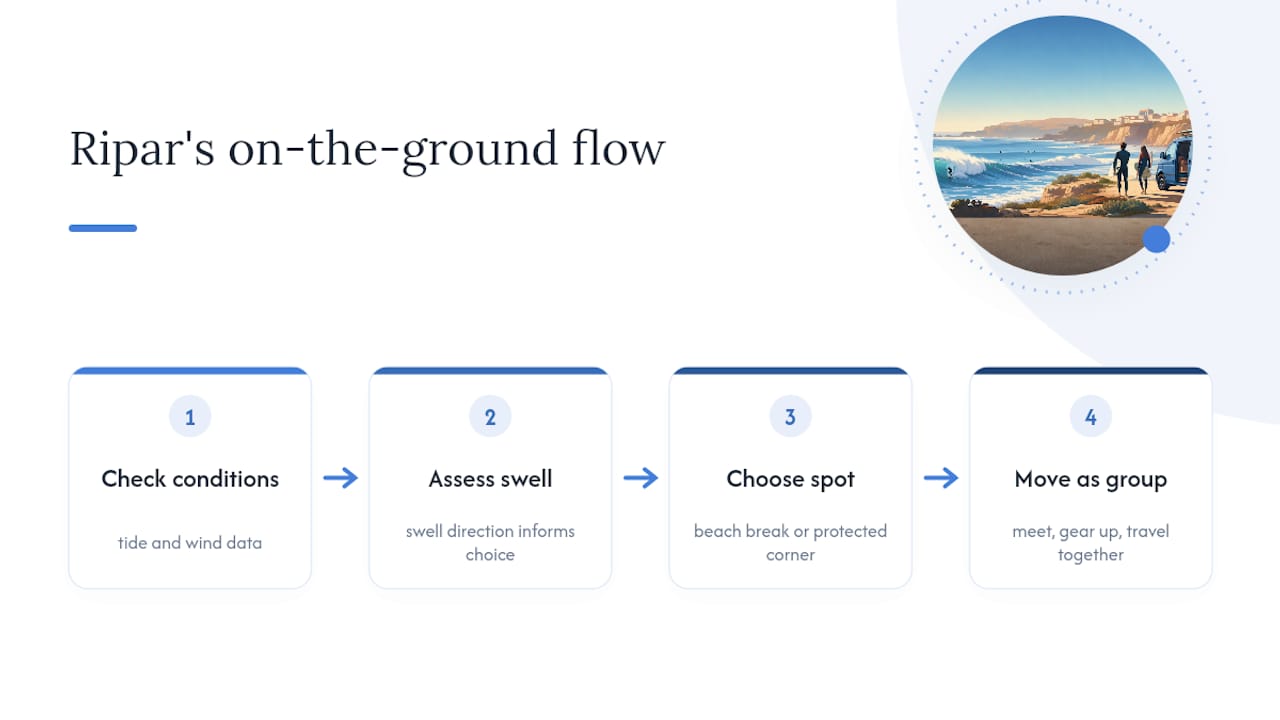
Instructors check the same tide and wind data covered above, then decide, often the night before, whether the group heads to a beach break or a more protected corner depending on swell direction. Students typically meet at the surf house, gear up, and travel together to whichever spot is firing that day rather than sticking to one fixed beach regardless of conditions.
Picking Your Own Best Month
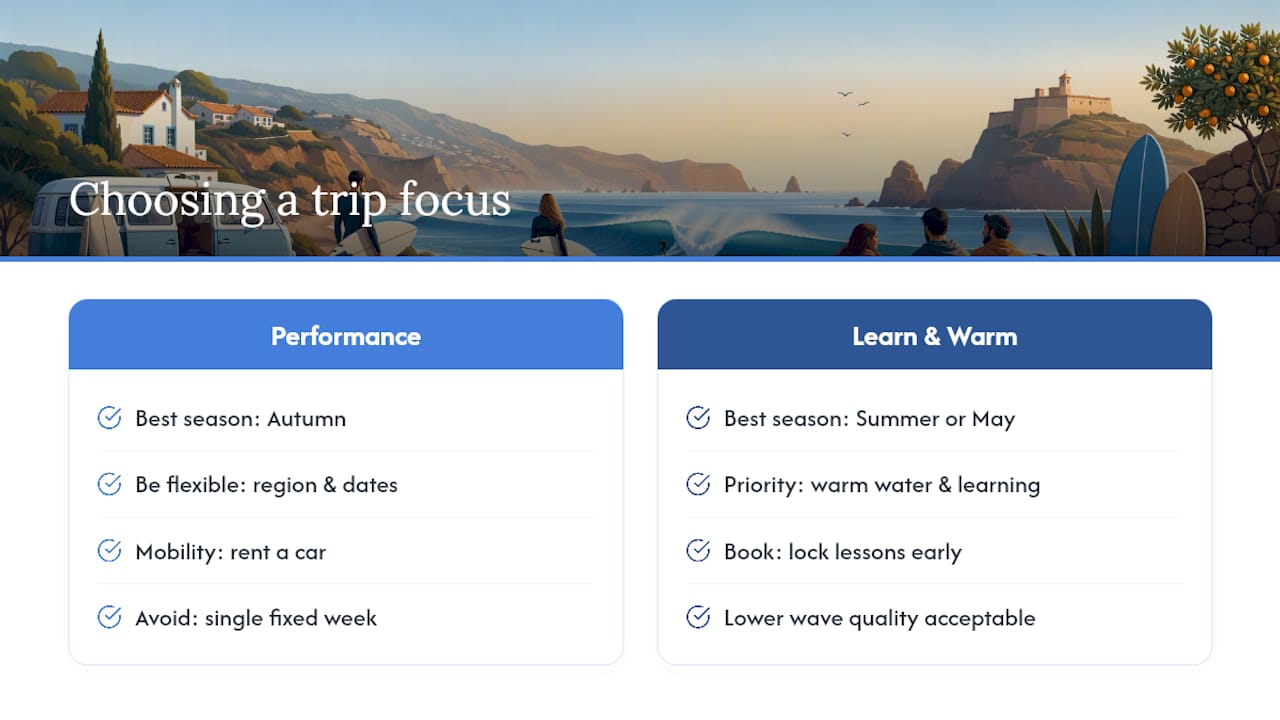
If you’re chasing performance waves, lean toward autumn and stay flexible on both region and exact dates. A single fixed week in a single spot is the riskiest way to plan a surf trip. If warm water and steady learning matter more than wave quality, summer or May works better, and locking in lessons early protects you from the crowds.
Mobility beats a calendar date. Renting a car and following the forecast between the Silver Coast, Alentejo, and the Algarve gets you better waves than committing to one town and hoping the swell cooperates.
— Fernando
Book Your Portugal Surf Trip Around the Season
Group lessons run heaviest through summer when warm water and small waves suit beginners best, mixed-level camps cluster around the September to November shoulder season when conditions improve and the crowds thin, and private coaching sessions serve intermediate and advanced surfers who want to work specific breaks on their own schedule.

Autumn dates fill up faster each year as more travelers catch onto the October advantage, so reserving a spot in a surf camp two to three months ahead gives you the best shot at availability. Summer group slots move fast too, particularly the group surf lessons in July and August. If you’re comparing accommodation options across the coast, a beach holiday comparison tool can help you sort dates and lodging before you commit. When you’re ready, book online directly and pick the dates that match the conditions you’re after.
Forecast Tools Worth Checking Before Every Session
For live planning, Surf-forecast’s Portugal maps overlay wind direction, swell energy, and webcams by spot. Surfline’s LOLA dashboard adds a 7 to 14 day outlook. The Portugal Guides and Red Bull’s spot guide round out planning with region-specific context.
Sources
FAQ
What Are the Best Beaches to Surf in Portugal?
Ericeira and Peniche lead the Silver Coast for consistency, while Arrifana and Amado stand out in the Algarve for warmer water and more forgiving waves.
What Are the Best Beaches to Surf in the Algarve?
Arrifana, Amado, and Sagres offer the Algarve’s most reliable conditions, with warm water and usable waves from late spring through early autumn.
What Are the Best Beaches to Surf on the Costa Vicentina?
The Alentejo’s Costa Vicentina favors quieter, less developed breaks that hold up well from spring through autumn, with fewer crowds than the Silver Coast.
What Are the Waves Like in the Algarve?
Algarve waves tend to run smaller and more manageable than the north or Silver Coast, making the region a solid choice for beginners and intermediates, though winter can bring stormier, less predictable swell.
When Should Beginners Plan a Portugal Surf Trip?
June through August offers the warmest water and smallest, most forgiving waves, making it the easiest season for beginners booking group lessons.
Recommended
Comments