

Start Surfing at 5–6. Check These 4 Readiness Signs for Kids

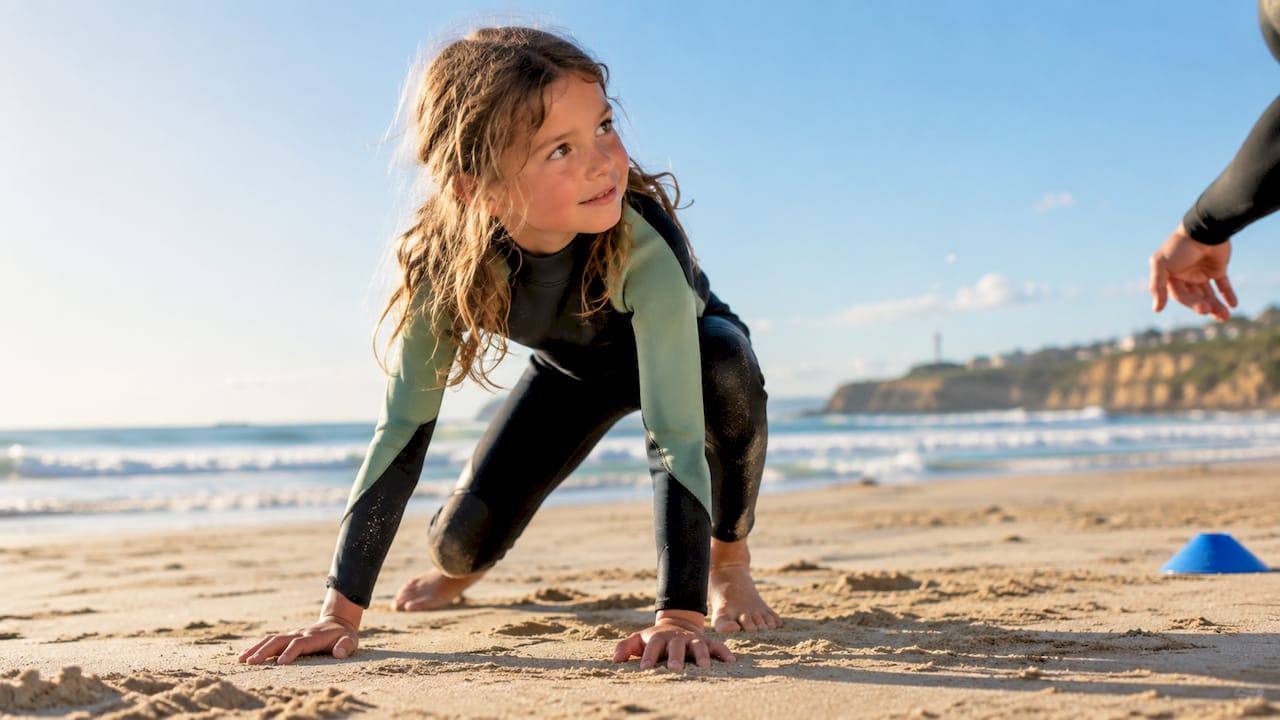
Most kids can start real surf lessons around age 5 to 6, and many often hit their fastest progress in middle childhood. But the number matters less than you’d think. A child’s readiness, meaning comfort in water and the ability to follow an instructor’s directions, decides whether a lesson goes well far more than the birthday on the calendar.
TL;DR:
The child’s water comfort, ability to float, follow instructions, and emotional maturity are more important than age when determining surf readiness.
Small group lessons with certified instructors and safety protocols are essential for a safe and successful beginner experience.
Kids aged 6 and older typically progress faster, but individual readiness varies widely regardless of age.
Lesson duration should be limited to 20-30 minutes for preschoolers and 45-60 minutes for older kids, with gear focusing on stability and safety.
Building skills through pool lessons, parent-led practice, and gradual exposure prepares children better for surf lessons than rushing into the ocean prematurely.
Table of Contents
Idade Para Começar Surf: What to Expect at Each Age
Surf schools generally sort kids into four rough stages, and each one calls for a different kind of lesson. Getting the stage right matters more than getting the exact age right.
Infant and toddler (under 3): This is pool territory, not surf territory. Parent-and-child swim classes build water confidence and comfort with splashing and submersion, but they aren’t surf lessons and shouldn’t be marketed as one.
Preschool (3 to 5): Lessons at this stage stay short and playful, usually confined to ankle-deep whitewater. Attention spans are the limiting factor here, which is why many schools cap sessions at 20 to 30 minutes.
Early school age (6 to 8): Coordination and listening skills improve enough that most schools open enrollment around early school age, commonly starting from age 6, according to SurfSpotGuide’s age guidance.
Ages 7 to 12: Often the fastest-progressing group. Better balance, more stamina, and a real ability to absorb coaching add up to quicker wins. NewaveSurf calls this the sweet spot, though individual kids still vary widely within it.
A 5-year-old who’s spent summers in the ocean might outpace an anxious 9-year-old who’s never been past knee-deep water. Age is a rough sorting tool. Readiness is the real filter.
Is Your Child Ready? A Practical Checklist
Before booking anything, run your child through a few honest checks. These matter more than any age cutoff a surf school posts on its website.
Water comfort: Can they stand and move confidently in chest-deep water without panic?
Basic floating or treading: Can they float or tread water for at least 15 to 20 seconds unassisted?
Listening under pressure: Can they follow a stranger’s instructions on the first or second try, even when excited or scared?
Self-reporting: Will they tell an adult if something feels wrong, rather than freezing or pretending it’s fine?
Instructors consistently rank emotional maturity above physical readiness for kids’ first lessons. A calm 6-year-old who follows directions often does better than a bigger, stronger 9-year-old who bolts at the first wave.
Pro Tip: Run a mock lesson at the pool first. Have them practice paddling motions, “pop-up” attempts on dry land, and following your commands like an instructor would. It’s a low-stakes dress rehearsal that reveals a lot.
Safety Standards and Instructor Credentials to Ask About
Ask direct questions before you hand over payment. A good surf school won’t flinch at any of these.
Student-to-instructor ratio: For young beginners, look for small groups, ideally no more than 4 to 6 kids per instructor, so every pop-up attempt gets watched.
Certification: Ask whether instructors hold credentials recognized by a body like the International Surfing Association, plus current first aid and lifeguard training.
On-day protocol: A proper lesson includes a beach briefing, a dry-land warm-up, clear drop-off and pick-up procedures, and a stated emergency plan.
Conditions check: Instructors should postpone or modify lessons when rip currents, heavy shore break, or unusually cold water make whitewater practice unsafe for beginners.
Rip currents cause the majority of ocean rescues at beaches, which is exactly why recognizing them before a lesson starts is a basic safety habit, not an afterthought. If a school waves off questions about ratios or certifications, treat that as a red flag, not a minor detail.
The Right Gear and Lesson Length for Kids
Beginner gear should prioritize stability over performance. A large foam soft-top board sized appropriately for kids’ age and size, floats easily and won’t hurt anyone on a wipeout.
Board: Foam soft-tops, sized up rather than down, since a bigger board is more forgiving for a shaky first attempt.
Wetsuit and rash guard: A snug but not restrictive wetsuit for cooler water, or just a rash guard with reef-safe sunscreen in warmer conditions.
Leash: Fitted to the child’s leg length, tight enough that it won’t slip off but loose enough not to chafe.
Session length: Preschoolers do best with 20 to 30 minutes in the water, while kids 6 and older can usually handle 45 to 60 minute lessons, once or twice a week to start.
Renting rather than buying makes sense for most families, especially with younger kids who outgrow boards and wetsuits within a season. A parent’s guide to sizing gear can help you avoid buying something your child will be too big for by summer’s end.
How a Real Kids’ Lesson Actually Runs
A well-run children’s lesson follows a rhythm: beach briefing, dry-land warm-up, whitewater practice, a few supervised pop-up attempts, then a short guided ride if the child is ready. Play comes first. Instructors use games and repeated small wins, rather than technical correction, to keep kids engaged.
Beach talk covers safety rules in plain language kids can repeat back.
Warm-up drills mimic paddling and standing on the sand before anyone touches water.
Whitewater reps build muscle memory faster than trying to catch a real wave too early.
Praise and repetition, not criticism, drive most of the confidence-building.
Progress tends to follow a predictable arc. Most beginners manage their first stand-up on a foam board within one to three lessons, with a more independent, consistent paddle-and-pop-up rhythm developing over several weeks of regular practice. That timeline holds for kids and adults alike, though kids often need more repetition and shorter bursts of focus to get there. Ripar’s own beginner lesson structure follows this same play-first sequence.
When to Wait, and What to Do Instead
Sometimes the honest answer is: not yet. A few clear signs it’s worth waiting.
Fear that doesn’t ease with reassurance. If your child freezes or cries at the sight of waves after a few gentle tries, pushing forward usually backfires.
No basic water comfort yet. If they’re not yet at ease in a pool, the ocean is the wrong place to start building that skill.
Recent illness or injury. Give recovery time before adding cold water and physical exertion.
In the meantime, pool-based swim lessons, parent-and-child aquatic classes, and simple bodyboarding at the shore all build the same core skills without the pressure of a formal lesson. Once your child passes the readiness checklist above, surf lessons become a natural next step rather than a leap.
A Quick Story From the Beach
One of our instructors remembers a 6-year-old who spent her whole first lesson refusing to leave the whitewater, then finally stood up on wave number nine and screamed with delight the whole ride in. That’s the goal: safety first, pace set by the kid, not the clock. When your child is ready, a taster lesson is the easiest way to find out.
— Fernando
Book a Family-Friendly First Lesson With Ripar
Surf schools often run small-group and private lessons built around readiness checkpoints rather than rigid age cutoffs. Experienced instructors keep group sizes low, follow a play-first whitewater progression, and adhere to clear safety protocols on every session.

Families booking together can choose a group surf lesson for kids who do well with peers, or a private surf lesson for children who need one-on-one attention before joining a group. Either way, check available dates and book a lesson online to get your child in the water with instructors who know how to read a nervous first-timer and adjust on the spot.
Sources
Recommended
Comments