

How to Join Beach Activities: A Traveler's Guide
- Fernando Antunes

- 4 days ago
- 10 min read
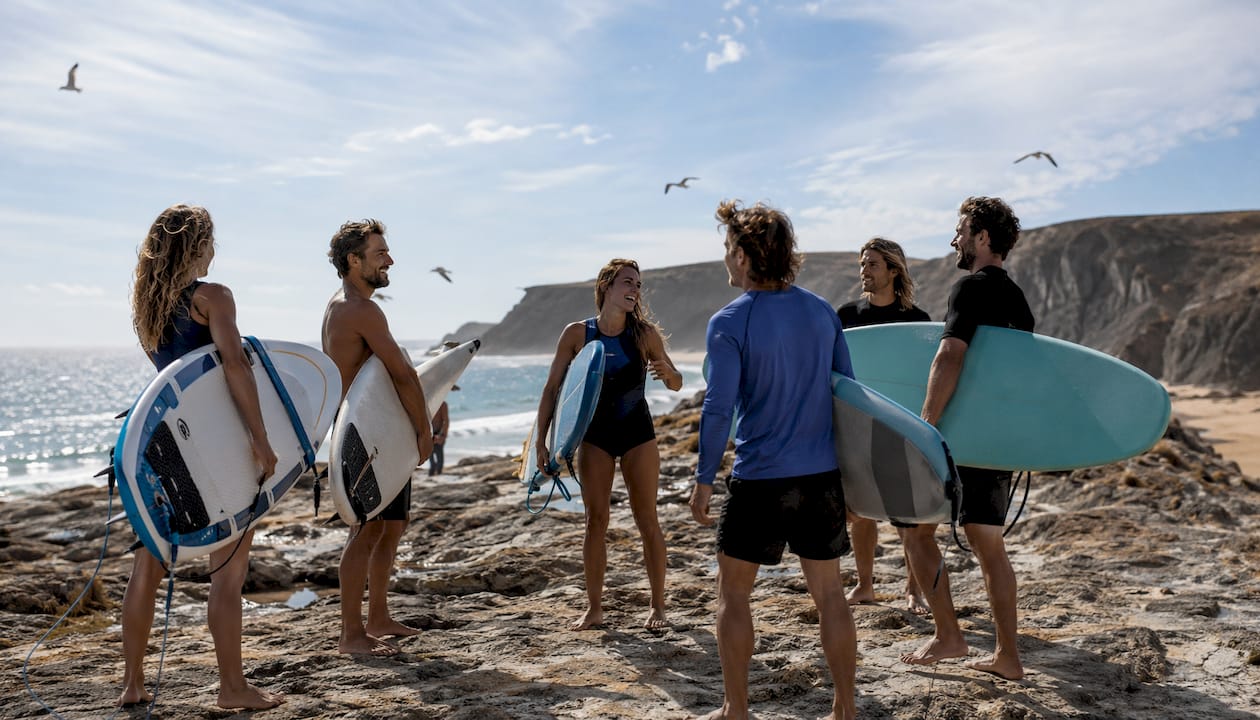
The fastest way to join beach activities while visiting Portugal is to book a surf lesson or camp slot with Riparsurfschool and check local beach social channels for informal games. Riparsurfschool has been running certified lessons at Praia Areia Branca since 2001, and their online booking system lets you reserve a spot before you even land. For safety checks, U.S. travelers should reference NOAA’s coastal forecasts and American Red Cross water-safety guidelines before entering any unfamiliar surf.
Fastest next actions:
Book a lesson or camp slot online at Riparsurfschool
Check beach safety flags and lifeguard hours before entering the water
Join local Instagram and Facebook beach groups to find pickup games and informal meetups
Pro Tip: Search Instagram for the beach name plus #surf or #beachvolleyball to find real-time posts from locals organizing games that same day.
Table of Contents
Where can you find beach activities as a tourist?
Local beach social media groups are the single highest-return discovery channel for informal pickup games and beginner-friendly meetups. For organized lessons and camps, a surf school’s website beats every other channel because availability, pricing, and instructor credentials are all in one place.
Here’s how each channel stacks up:
Surf school websites (Riparsurfschool): best for structured lessons, multi-day camps, and equipment rental — check for real-time availability and certified instructor profiles
Local Facebook groups: search “[beach name] + volleyball” or “[beach name] + surf meetup” — look for posts with recent timestamps and active comment threads
Instagram local hashtags: #AreiaBranca, #Penichesurf, or the beach name pulls up same-day activity posts from locals and visiting surfers
Tourist information centers: reliable for scheduled events, guided tours, and seasonal activity calendars — staff can often point you to recurring beach games
Hotel concierges: useful for curated, vetted options; less useful for spontaneous pickup games
Beach noticeboards: check near lifeguard stations and parking areas for handwritten or printed flyers about weekly games
Pickup game schedules are often posted on community event sites alongside tournament dates, so bookmarking a local events page pays off for planning a week ahead.
Pro Tip: When you find a Facebook group, DM the organizer directly rather than commenting publicly — you’ll get a faster answer and a more personal welcome.
How do you join informal beach games and meetups?
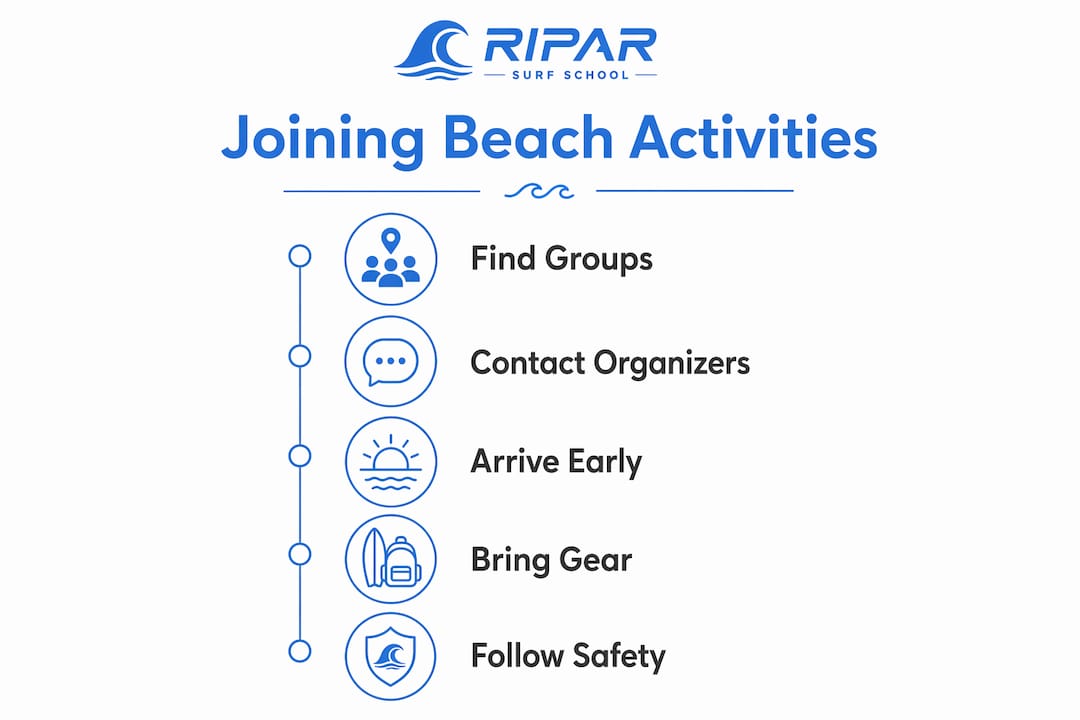
The standard path is simple: find a group post or show up when games are scheduled, introduce yourself, and ask to sub in. Subbing into an established match is one of the most reliable ways newcomers break into beach-sports communities — league desks and group organizers actively look for substitutes.
Two approach scripts that work for English-speaking tourists:
“Hey, I’m visiting for the week — any chance I could sub in next round?”
“I’m a bit rusty but love playing — happy to fill in wherever you need.”
That second line matters. Stating you’re “rusty” or a beginner openly increases acceptance into established groups. Experienced players relax when they know you’re not going to compete aggressively or disrupt the dynamic.
Etiquette checklist:
Bring your own water and sunscreen — don’t rely on the group
Rotate fairly and step out when the original player returns
Respect nets, dune boundaries, and any marked court lines
Disclose your skill level honestly before the game starts
Decline politely if the game is clearly competitive and you’re not ready
Pro Tip: Arrive 10–15 minutes before the scheduled start time. Organizers are most open to new players before the game locks in — not mid-match.
How do you book structured surf lessons and camps?
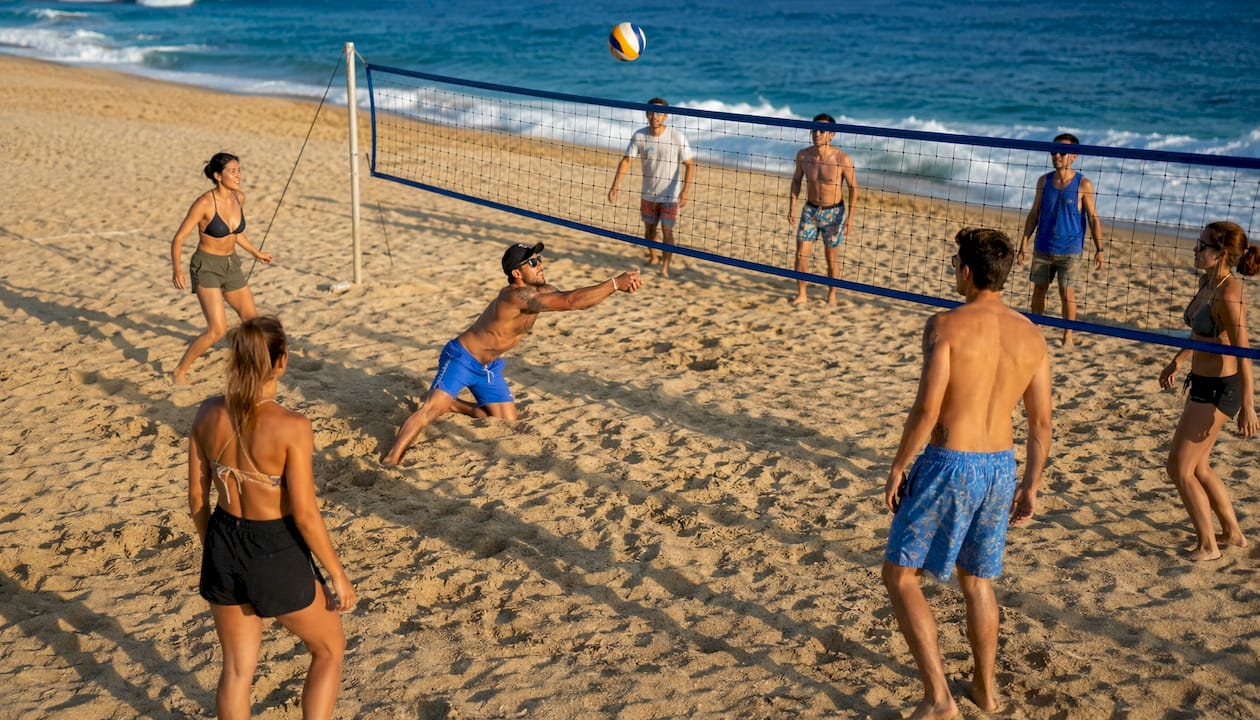
Booking a surf lesson or camp from abroad takes about five minutes if you know what to check. For a beginner surf lesson, the key variables are date availability, skill-level match, and what equipment is included.
Booking checklist:
Confirm your dates and the school’s availability window
Select the right format: group lesson (social, lower cost), private lesson (faster progression), or multi-day camp (immersive holiday)
Verify instructor certifications and student-to-instructor ratio
Check cancellation policy — look for at least 48-hour flexibility
Confirm included equipment (board, leash, wetsuit if needed)
Note any medical or insurance requirements in the booking form
Which format suits your goals?
Group lessons: best for first-timers who want a social experience and a lower price point
Private lessons: ideal when you have limited days and want to progress fast, or if you’re uncomfortable in a group setting
Multi-day surf camps: the right call for a full surf holiday — accommodation, instruction, and community in one package
Trust signals worth checking: instructor certifications, years in operation, an online booking system, small-group limits, and on-site facilities like showers and equipment storage. Riparsurfschool checks all of these, with certified local instructors and a surf house setup that removes the usual friction of renting gear separately.
Pro Tip: If you have three days or fewer, go private. Group lessons are great for social energy, but a private instructor can cut your learning curve in half when time is tight.
What safety checks should you run before any beach activity?
Always verify local safety flags and lifeguard presence before entering the water. This single step prevents most preventable incidents for visiting surfers and swimmers.
Pre-activity safety checklist:
Beach flag system: green = safe, yellow = caution, red = dangerous, purple = marine life hazard
Lifeguard hours: confirm they’re on duty before you enter the water
Rip current warnings: ask the lifeguard or check posted notices near the water entry
Water quality: look for posted cleanliness notices or check local municipal beach reports
Swell forecast: U.S. travelers can use NOAA’s coastal forecasts; check wave height and period for your specific spot
Surf spot accessibility: some spots have rocky entries or strong shore breaks — ask your instructor which zone is appropriate for your level
Beach quality and safety conditions directly influence participation confidence, and lifeguard presence with a clear flag system gives the best immediate read on whether a beach is safe for group activities. The Riparsurfschool ocean safety checklist covers these points in detail.
For travel insurance, confirm your policy covers water sports and surf activities specifically. Standard travel insurance often excludes “adventure sports” — read the fine print or add a rider before you leave home.
Pro Tip: Ask your surf instructor which zone to use and what each flag color means at that specific beach. Flag systems vary slightly by country, and Portugal’s beaches use the European standard, which differs from some U.S. beach systems.
What should you pack for a surf lesson or beach day?
Pack light. Most surf schools handle the heavy gear.
Bring with you:
Swimwear and a rashguard
Reef-safe sunscreen (SPF 50+)
Reusable water bottle
Photo ID and payment card
Quick-dry towel
Small first-aid kit (blister pads, antiseptic wipe)
Sandals or water shoes for rocky access paths
Typically provided by the surf school:
Surfboard and leash
Wetsuit (seasonal — usually needed October through April in Portugal)
Safety briefing and basic technique instruction
In summer, a wetsuit is optional at Praia Areia Branca, but a rashguard is always worth wearing for sun protection. For a longer trip checklist, the Beach Packing Essentials 2026 guide covers everything from multi-day camp gear to day-trip minimums.
How do you evaluate and choose a surf school?
Lead with three criteria: safety certifications, instructor experience, and a clear cancellation and insurance policy. Everything else is secondary.
Decision checklist:
Instructor certifications and years of local experience
Student-to-instructor ratio (smaller is better — aim for 6:1 or fewer)
Equipment quality and condition
Transparent pricing with a clear cancellation window
On-site facilities: showers, equipment storage, deck area
Location fit: small-beach village versus busy resort (the former usually means more personal attention)
Accessibility considerations: travelers with limited mobility should ask directly about beach pathway access, adaptive equipment availability, and whether the school can accommodate modified lesson formats. Surf spot accessibility varies significantly by location — a school based at a calmer, shallower beach is a better starting point than one at a high-performance reef break.
Riparsurfschool’s setup at Praia Areia Branca — certified local instructors, on-site equipment, showers, and a deck area — reflects exactly what a well-run school looks like in practice.
What do surf lessons and camps typically cost?
Lessons are usually available same-day if slots are open. For peak summer (June through August), book a multi-day camp at least one to two weeks out. Shoulder season (April, May, September, October) offers more flexibility, often with last-minute availability.
Typical cost ranges for Portugal (in euros, as locally denominated):
Single group lesson: €35–€55
Single private lesson: €60–€90
Multi-day surf camp (5–7 days, accommodation included): €400–€800 depending on room type and season
Peak-season prices run toward the top of those ranges. Shoulder season can be 15–25% lower and the waves are often just as good.
For U.S. travelers: Portugal uses euros (€). Cards are widely accepted, but carry a small amount of cash for beach cafes and informal gear rentals. Tipping is appreciated but not mandatory — rounding up or leaving €2–€5 after a lesson is standard.
Organized tournaments and league seasons require pre-registration and sometimes a governing-body membership, which adds cost and lead time beyond casual play.
How do you connect with the local beach community?
Show up consistently. One lesson is an introduction; three sessions at the same spot turns you into a familiar face. Locals notice who respects the water and the lineup.
A few habits that accelerate integration: greet the lifeguards by name, learn two or three words of Portuguese (obrigado, bom dia), and follow local surf etiquette in the water — don’t drop in on someone else’s wave, and wait your turn in the lineup. Small-beach villages like Praia Areia Branca have tight-knit surf communities where word travels fast, in both directions.
Joining a structured lesson or camp also fast-tracks social connection. Instructors introduce students to each other, and a multi-day camp naturally builds the kind of shared experience that turns strangers into surf partners by day three.
What travel insurance do you need for surf activities?
Standard travel insurance policies frequently exclude water sports and “adventure activities.” Before you book a surf lesson or camp, check your policy’s exclusions list specifically for surfing, bodyboarding, and ocean swimming.
What to look for in a surf-ready policy:
Medical evacuation coverage: ocean injuries can require helicopter or boat transport
Emergency medical: confirm it covers water-sport injuries, not just illness
Trip cancellation for weather: useful if a swell or storm cancels your camp days
Equipment coverage: if you’re renting a board, check whether the policy covers damage
World Nomads and similar adventure-travel insurers explicitly list surfing as a covered activity at standard plan levels — worth comparing before you default to a basic credit-card travel policy. Always read the fine print on depth limits and wave-height exclusions, which some policies include.
Key Takeaways
Joining beach activities as a tourist comes down to three moves: book a structured lesson with a certified local school, verify safety conditions before you enter the water, and use social channels to find informal games.
Point | Details |
Book early in peak season | Group lessons may be available same-day; multi-day camps in June–August need 1–2 weeks’ notice. |
Use social channels for pickup games | Local Facebook groups and Instagram hashtags are the fastest way to find informal beach games. |
Say you’re “rusty” when joining groups | Stating your skill level honestly increases acceptance and reduces social friction in established groups. |
Pack light — schools provide gear | Bring swimwear, reef-safe sunscreen, and a towel; boards, leashes, and wetsuits are typically provided. |
Riparsurfschool is the recommended option | Certified local instructors, on-site facilities, and online booking at Praia Areia Branca since 2001. |
What actually matters when you first paddle out
Most first-time surf tourists focus on the wrong thing: finding the perfect wave. What actually determines whether you have a good first session is how well your instructor reads your physical comfort in the water and adjusts the lesson in real time. A scripted group lesson that ignores the fact that half the students are nervous in chest-deep water is less useful than a shorter, more attentive session on a calmer day.
The blended learning approach — watching technique videos the night before, then drilling the same movements with an instructor the next morning — genuinely accelerates progress. It’s not a gimmick. Your brain consolidates the visual pattern overnight, and your body has a reference point when the instructor corrects your pop-up stance on the sand.
One thing I’d tell every first-timer arriving at Praia Areia Branca: don’t wait until you feel “ready.” The water teaches you faster than any amount of preparation on land. Show up, be honest about your level, and let the instructor do the rest.
Riparsurfschool: book your lesson or camp at Praia Areia Branca
Riparsurfschool offers the most direct route to getting in the water at one of Portugal’s best surf stretches. Established in 2001, the school runs group surf lessons, private lessons, and multi-day surf-camp packages with on-site accommodation, equipment, showers, and a deck area — all at Praia Areia Branca, a small beach village near Peniche and Ericeira. Certified local instructors keep groups small, which means you get actual feedback, not just a safety briefing and a push into the whitewater.
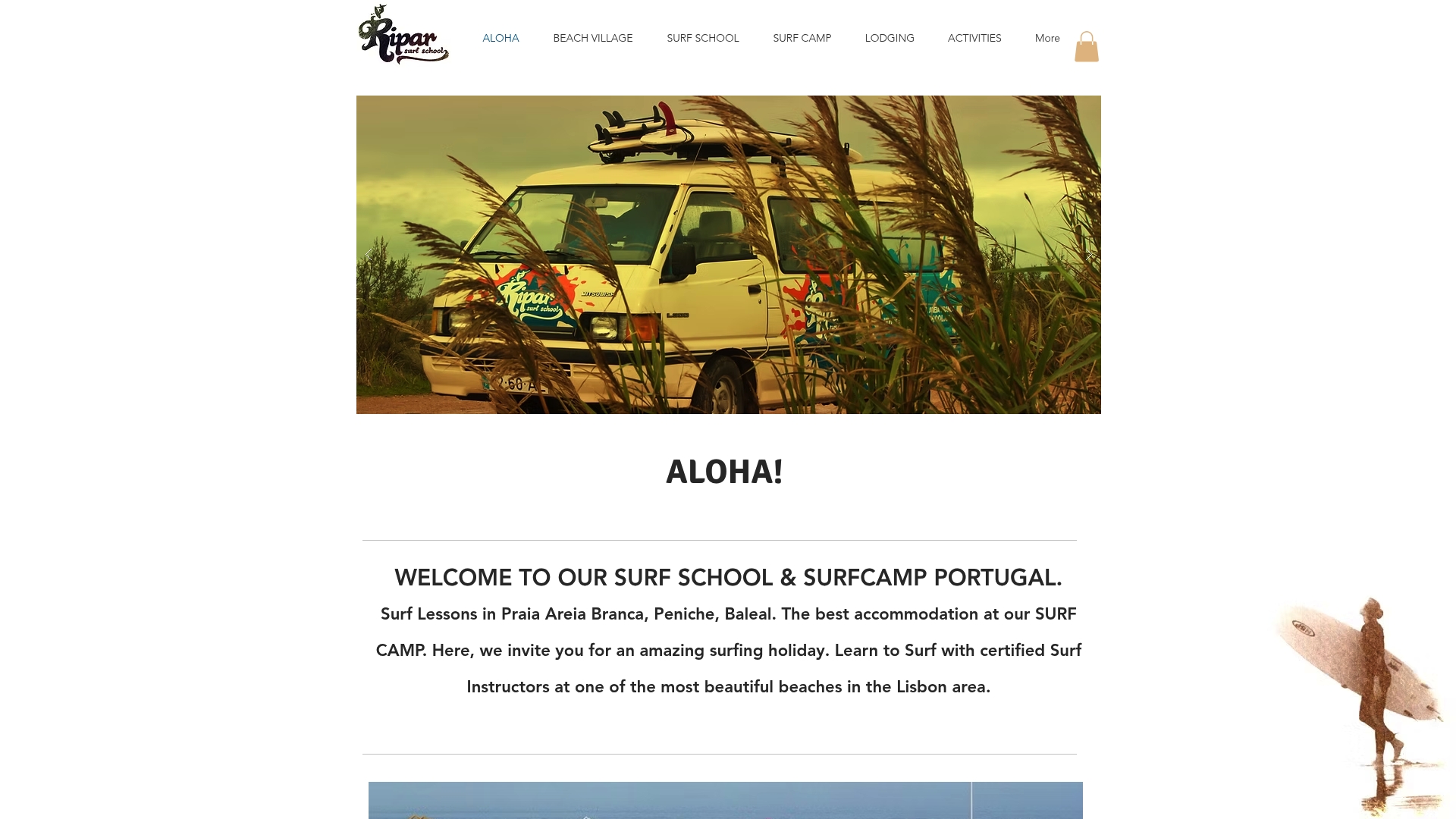
For a surf-camp holiday, book your camp slot directly online. For a single lesson, head to the book online page and select group or private based on your timeline and comfort level. Peak-season slots fill fast — check current availability now and lock in your dates.
Useful sources and safety references
NOAA coastal forecasts: check swell height, period, and coastal wind conditions before any surf session — updated daily for U.S. travelers planning Portugal trips
American Red Cross water-safety guidelines: foundational swim and ocean-safety guidance for travelers unfamiliar with Atlantic surf conditions
Riparsurfschool ocean safety checklist: covers beach flags, rip currents, and surf-specific hazards at Praia Areia Branca
Riparsurfschool beach safety for families: practical flag-system and hazard guide for traveling groups
Local Facebook groups and Instagram hashtags (#AreiaBranca, #Penichesurf): real-time updates on conditions, pickup games, and informal meetups from locals and visiting surfers
Riparsurfschool booking pages: lessons and camps for confirmed availability and current pricing
Recommended
Comments