

Essential surf camp logistics: elevate your Portugal trip

TL;DR:
Effective surf camp logistics are crucial for a seamless, enjoyable experience on and off the water.
Clear communication and well-organized scheduling enhance community and reduce stress for guests.
Choosing a camp with comprehensive support in transport, meals, and gear management improves satisfaction.
Most people booking a surf camp picture themselves riding waves, not thinking about shuttle schedules or meal plans. But here’s the uncomfortable truth: the quality of your surfing holiday often comes down to how well the camp runs behind the scenes. Logistics are the invisible architecture that holds your entire experience together. Get them right, and you’re paddling out refreshed, on time, and surrounded by great people. Get them wrong, and you’re hungry, confused, and missing the best swells. This guide breaks down exactly what surf camp logistics involve, why they matter more than most booking sites admit, and how to use that knowledge to choose smarter.
Table of Contents
Key Takeaways
Point | Details |
Logistics drive experience | Well-organized logistics make every part of surf camp easier, safer, and more enjoyable. |
Booking matters most | Choosing camps with clear booking and communication is key to a fun, stress-free holiday. |
Smooth planning builds community | Seamless logistics pave the way for group connection, spontaneity, and lasting memories. |
Know what to compare | Compare surf camps based on their transport, lodging, schedules, and guest flexibility—not just the waves. |
What defines surf camp logistics?
When most people hear “logistics,” they picture a shuttle bus from the airport. Maybe a shared bedroom. But in the surf camp world, logistics stretch across every single touchpoint of your stay, and they start before you even pack your bag.
Logistics at surf camps cover far more than transportation. They include accommodation, meals, and surf equipment management, and the way each piece is handled directly shapes how much you enjoy your time on and off the water.
Here’s what a fully realized logistics framework actually covers:
Transport: Airport pickups, daily transfers to surf spots, and returning to the camp after sessions
Accommodation: Room assignments, check-in timing, linen, and facilities like showers and storage
Meals: Breakfast timing before sessions, packed lunches for all-day surf days, dinner service, and dietary accommodations
Daily schedule: Session start times, rest windows, evening activities, and flexibility for weather changes
Surf equipment: Board selection by skill level, wetsuit fitting, rinse stations, and dry storage overnight
Communication: Pre-arrival briefings, on-site notice boards, and group coordination tools
When each of these elements works smoothly, something almost magical happens. Your group stops feeling like strangers sharing a house and starts moving like a team. You wake up knowing exactly what’s happening, grab the right board, and hit the water without friction. That ease is not accidental. It’s the result of careful planning.
Misconceptions run deep here. Many first-timers assume that a “good location” and “certified instructors” are enough. They’re not. A stunning beach paired with poorly timed meals, vague schedules, and disorganized gear rental creates stress that bleeds into your surfing. Confidence in the water is hard to build when you’re anxious about whether lunch is actually coming.
Strong community surf retreat benefits are almost always rooted in operational excellence. The bonding, the laughter, the “I can’t believe I stood up today” moments happen within a structure that logistics make possible.
Pro Tip: Pack a small waterproof notepad for your first day. Jot down the daily schedule, your instructor’s name, and the gear locker code. Even great camps can have busy mornings where details get lost in translation.
The journey: How surf camp logistics shape your experience
Once you understand the scope of logistics, follow how these moving pieces impact every stage of your surf camp adventure.
Well-planned logistics help guests feel welcomed and supported from the moment they book, and that feeling either grows or erodes depending on every interaction that follows.
Here’s the typical logistical journey, step by step:
Pre-booking: You receive clear package details, session frequencies, accommodation specs, and arrival instructions before paying.
Arrival: A pickup is arranged or directions are crystal clear. You’re greeted, shown your room, and given a camp orientation within the first hour.
Onboarding: Gear is assigned, skill level is assessed, and you’re placed in the right group. No awkward guesswork for instructors or you.
Daily schedule: Mornings follow a consistent rhythm. Breakfast by 8, gear check by 9, water by 9:30. Predictability breeds confidence.
Rest and recovery: Afternoons include downtime, optional activities, and time to explore the local village.
Departure: Checkout is communicated clearly, luggage storage is available for late flights, and you leave without chaos.
Communication is the glue holding all of this together. Camps that use pre-arrival emails, WhatsApp groups, or even a simple printed daily schedule eliminate the anxiety that kills the vacation vibe. You should never arrive wondering what tomorrow looks like.
“The difference between a surf camp that transforms you and one that just tires you out is almost never the waves. It’s the preparation that happens before and after each session.” — Experienced surf camp coordinator, Portugal
Pro Tip: Ask the camp if they use a group messaging app for daily updates. A simple group chat where the instructor posts tomorrow’s wake-up time and surf conditions takes all the guesswork out of your morning.
Comparing surf camp logistics: What to look for before booking
When deciding where to book, comparing how surf camps handle logistics can make all the difference.
Different camps offer drastically different levels of logistical support, affecting group size dynamics and flexibility in ways that directly impact your progress and enjoyment.
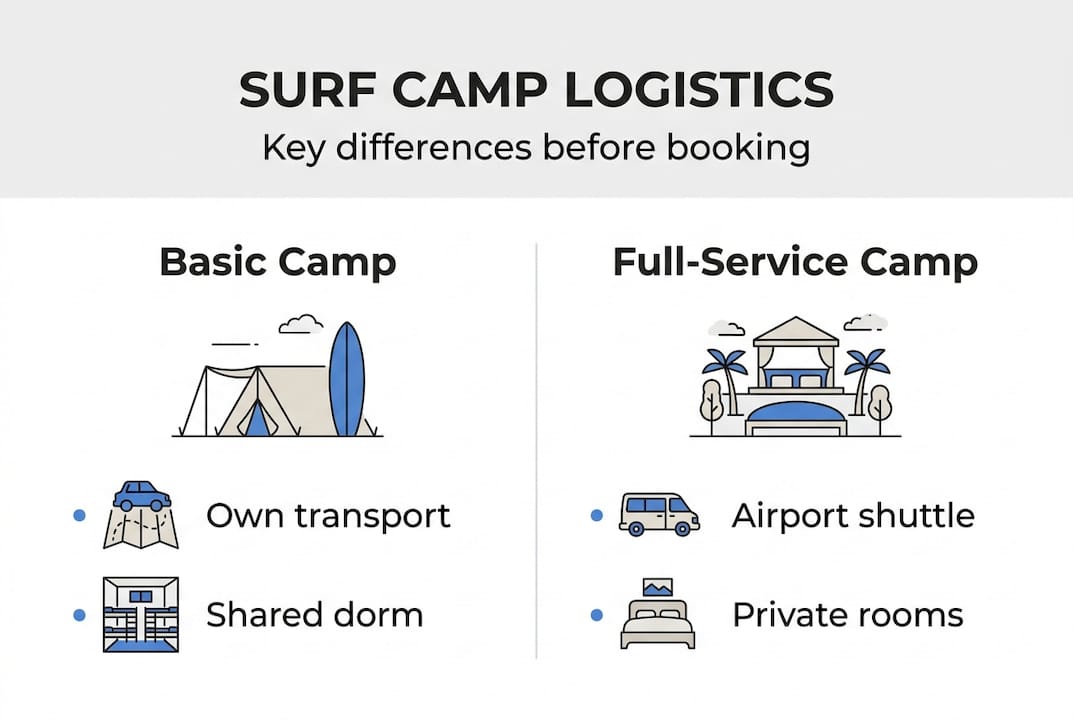
Feature | Basic camp | Mid-tier camp | Full-service camp |
Airport transport | Self-arranged | Shared shuttle | Private or coordinated pickup |
Meals | Breakfast only | Breakfast and dinner | All meals included |
Lesson organization | Drop-in sessions | Fixed weekly schedule | Personalized daily plan |
Gear storage | Shared rack | Labeled storage | Individual locker |
Extra activities | None | Weekend excursions | Daily optional programs |
This table is not just about comfort. It’s about how much mental energy you spend managing your own trip versus actually surfing and connecting with others. The more logistics the camp handles, the more headspace you have for the things that matter.
Before you book any Portugal surf camp management package, run through this checklist:
Does the camp offer transport from major hubs like Lisbon or Porto?
What is the maximum group size per instructor?
Are meals included, and can they accommodate vegetarian or gluten-free diets?
How is surf gear allocated and stored between sessions?
What happens if weather cancels a session?
These questions reveal how operationally mature a camp is. A camp that stumbles on these answers is likely to stumble during your stay.
Solving common surf camp logistics challenges
Understanding possible challenges helps you plan for a hassle-free stay.
Advanced booking systems and clear policies help prevent overbooking and ensure guest satisfaction, which is why the platform a camp uses matters as much as its reviews.
Challenge | What goes wrong | Practical solution |
Overbooking | Too many guests, not enough boards or beds | Book via a solutions for overbooking system with real-time availability |
Lost or mixed-up gear | Wrong board size, missing wetsuits | Label your gear, confirm your assignment on day one |
Transportation delays | Late arrivals miss morning sessions | Build a buffer day before your first session |
Dietary restrictions missed | Meals don’t match your needs | Submit dietary info at booking, follow up one week before arrival |
Schedule confusion | Group splits, missed meetups | Ask for a printed or digital daily schedule on arrival |
Using a reliable online surf camp booking platform protects you before you even arrive. Camps with modern booking tools are typically better organized across all areas, not just reservations.
Here are a few quick tips every traveler should follow:
Get travel insurance that covers surf-related cancellations and gear damage
Label your boards and wetsuits with your name and room number from day one
Confirm your schedule by messaging the camp 48 hours before arrival
Ask about surf lesson packages to lock in your session count and smooth out the daily planning
The campers who have the fewest problems are almost always the ones who communicated the most before arriving. Preparation is not paranoia. It’s just smart surfing.
Hospitality and community: The hidden benefits of seamless logistics
Finally, let’s see how logistics actually build the surf camp community you came for.
Strong logistics foster guest satisfaction and create a foundation for community, which means the friendships you make at surf camp are often a direct byproduct of how well the operation runs.
When schedules are clear and meals are shared, connection happens naturally. Consider what good Portugal surf camp lodging and operations make possible:
Organized group dinners where everyone recaps the day’s surf
Activity sign-up boards for yoga, bike rides, or village walks
Post-session gear rinse routines that turn into casual conversation
Evening bonfires or social events built into the weekly calendar
Portuguese surf camps near spots like Praia Areia Branca are increasingly setting new benchmarks here. The combination of a genuine village atmosphere and structured hospitality creates exactly the kind of warm, connected experience that keeps guests coming back year after year.
Why logistics matter more than you think: Our hard-won lessons
After more than two decades of running surf camps in Portugal, we’ve watched the same pattern play out more times than we can count. A guest arrives buzzing with excitement, ready to transform into a surfer. Then small logistical cracks start to show. A missing wetsuit here, a skipped meal there, an unclear session time that has three people waiting on the wrong beach. The excitement fades fast.
Here’s what most surf camp guides won’t tell you: logistics are the experience. The wave doesn’t care if you’re stressed. But you will surf better, learn faster, and enjoy every session more when the practical stuff is handled.
We’ve seen guests who couldn’t even pop up on a board on day one become confident surfers by day five, simply because they weren’t wasting mental energy on confusion. One guest told us that joining group surf lessons in a well-organized camp changed not just her surfing but her entire social confidence.
Pro Tip: Before you book anywhere, call or message the camp and ask one simple question: “Walk me through a typical day.” If they can answer that clearly and enthusiastically, you’re in good hands.
Don’t pick your camp based on the wave photo in the header. Ask about the schedule. Ask about the meals. Ask how they handle a rainy day. The answers will tell you everything.
Ready for a seamless surf camp in Portugal?
Everything we’ve covered, from gear management to group scheduling, reflects exactly how we operate at Ripar Surf School and Surfcamp Portugal. Since 2001, we’ve been refining the behind-the-scenes systems that let you focus on one thing: surfing and having the time of your life.
Our small-beach-village setting at Praia Areia Branca keeps things intimate, personal, and genuinely connected. Whether you want to book your surf camp for a full week or explore what life looks like at our Portugal surf house, we make the logistics easy so the experience stays unforgettable. Come ride with us.
Frequently asked questions
What logistics should I check before booking a surf camp?
Confirm transport, accommodation standards, meal options, surf gear availability, and daily schedule clarity before you book. Logistics covers transportation, accommodation, and gear management, so asking about all three upfront saves headaches later.
How do surf camps handle unexpected schedule changes or weather?
Most surf camps communicate changes quickly using group chats, offer alternative activities, or adjust session times to match conditions. Strong logistics support flexibility and guest satisfaction even when the forecast doesn’t cooperate.
Can I join a surf camp with dietary restrictions?
Yes, many camps accommodate dietary restrictions if you notify them ahead of time during the booking process. Group size and logistics affect how well a camp can support individual dietary needs, so smaller camps often handle this better.
Why is a booking platform important for surf camp logistics?
A strong booking system prevents overbooking, secures your spot, and streamlines all travel arrangements before you arrive. Advanced booking systems prevent overbooking and ensure satisfaction by maintaining real-time availability across all packages.
Recommended
Comments