

Four Beginner Surf Mistakes You Can Fix in One Session

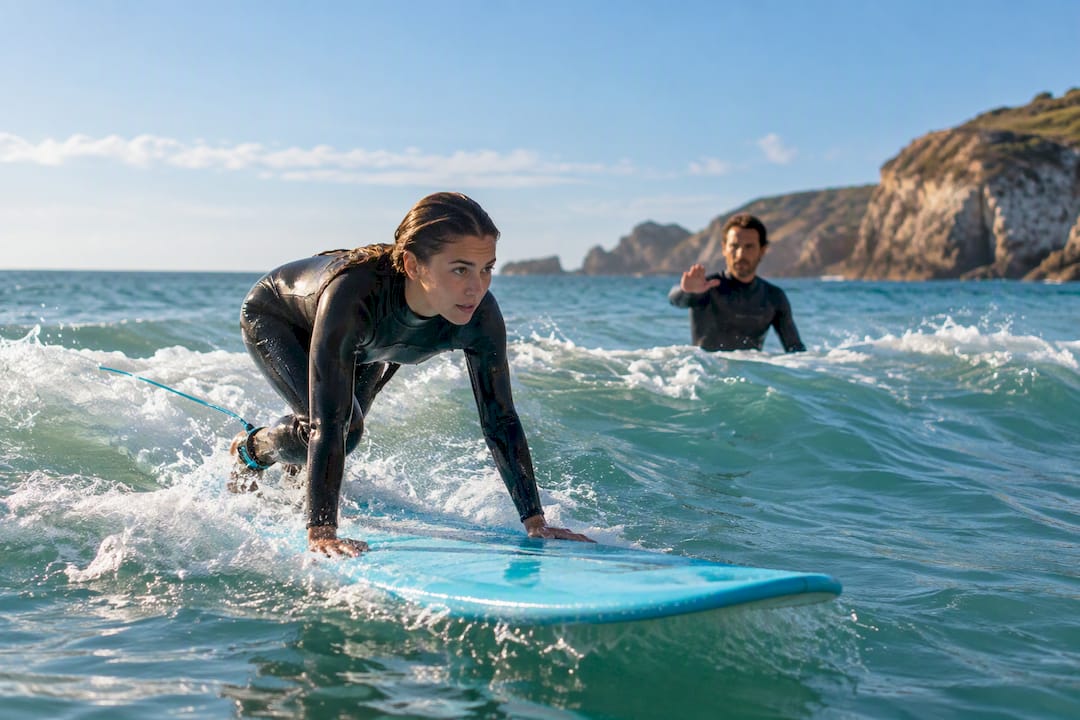
Most beginner surfers fall into the same four traps: the wrong board, bad position on the deck, quitting the paddle too early, and a slow, hesitant pop-up. Fix them by riding a stable board suited to your size, timing your paddle to the wave instead of guessing, and correcting one habit per session instead of five. Everything below breaks those fixes into drills you can run this week.
TL;DR:
Using a stable, appropriately sized foam or soft-top board helps beginners catch waves earlier and reduces frustration caused by board control issues.
Properly positioning on the board involves balancing nose and tail trim to ensure optimal glide and avoid nose-diving or sluggishness.
Continuing paddling beyond the initial wave lift increases chances of catching the wave, emphasizing the importance of paddle timing and extra strokes.
A continuous, smooth pop-up motion and keeping the eyes on the horizon improve balance and reduce wipeouts caused by hesitation or body rigidity.
Focusing on one correction per session and seeking guided lessons accelerates progress by preventing the formation of multiple bad habits simultaneously.
Table of Contents
The Common Surfing Errors Beginners Make Without Realizing It
Coaches who watch hundreds of beginners paddle out tend to see the same seven problems repeat: wrong board, wrong spot on the deck, wasted paddle strokes, a mistimed take-off, popping up on the knees first, staring down at your feet, and a stiff, locked-up stance. The fix isn’t tackling all seven at once. It’s isolating one issue at a time in conditions you can handle, then moving to the next.
That single habit, correcting one thing per session, separates surfers who plateau for years from the ones who are standing up confidently within a few sessions. Everything from here on breaks that habit into specific, doable steps.
Choosing the Wrong Board
A board that’s too short or too aggressive for your skill level makes paddling harder and take-off nearly impossible. A stable, appropriately sized board does the opposite. It catches waves earlier and forgives bad positioning while you’re still learning to read them. Prioritize length and width over how the board looks.
Rent a soft-top or foam board, not a shortboard, for at least your first several sessions.
Ask your instructor or rental shop what length fits your height and weight, not what’s trending.
Confirm the leash plug matches your leash before you paddle out.
Poor Position on the Board
If the nose keeps diving underwater or the board feels sluggish and won’t glide, you’re lying too far forward. If you’re wobbling and the tail drags, you’re too far back. Neither position lets the board plane properly.
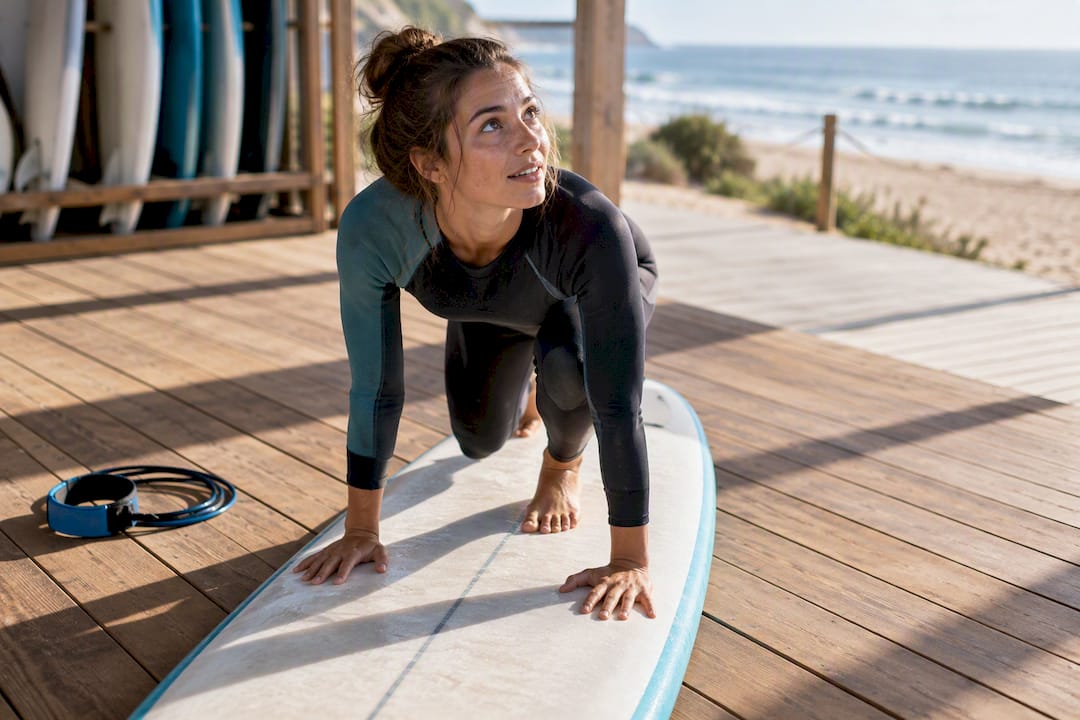
On the beach, lie on the board and find the point where the nose sits just above the water when you press down slightly.
In the water, paddle a few strokes and check: nose up but not high, tail not dragging.
Slide two inches forward, then two inches back, and feel which position glides fastest. That’s your trim spot.
Inefficient Paddling and Stopping Too Soon
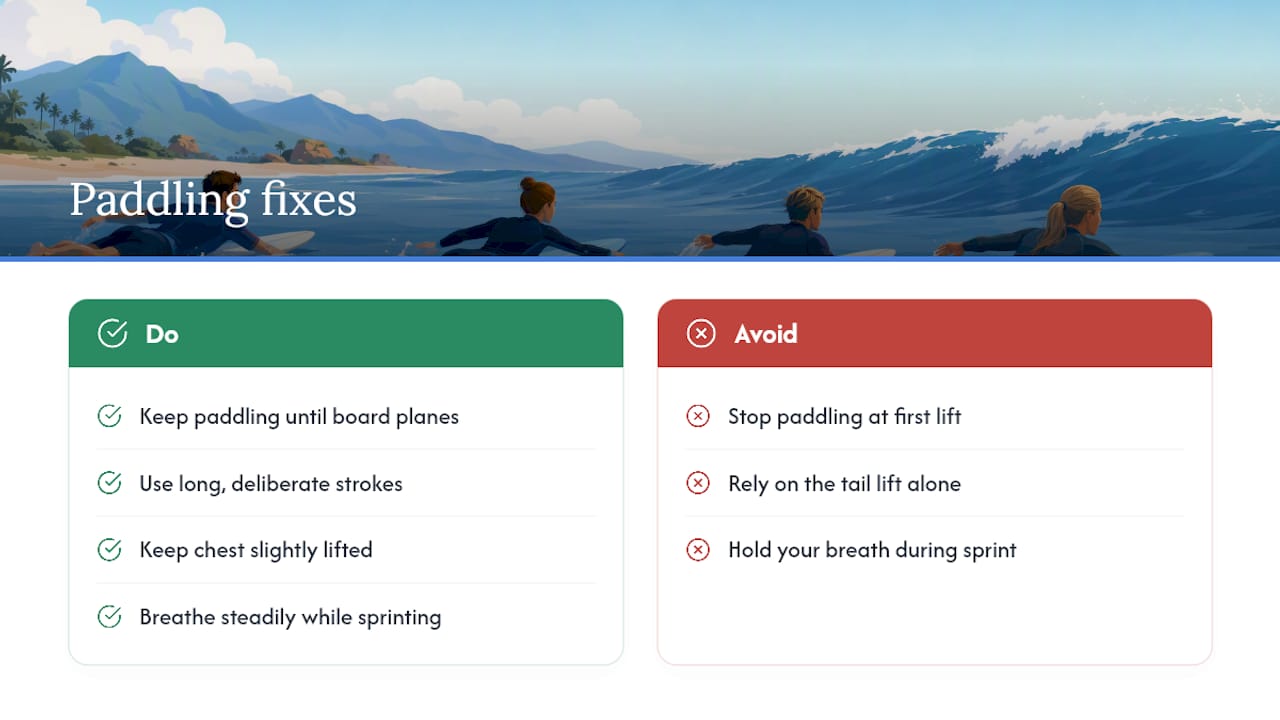
The single biggest reason beginners miss waves they were actually in position for: they stop paddling the moment the board lifts, thinking they’ve “caught it.” That lift is just the wave picking up the tail. Coaches call the actual rule paddle more, catch more, and it means continuing full strokes until the board is clearly planing on its own, gliding without your effort.
Use long, deliberate strokes, keep your chest slightly lifted, and breathe steadily instead of holding your breath through the sprint.
Pro Tip: Count three extra strokes after you feel the first lift. That’s usually the gap between paddling into whitewater and actually riding it.
Pop-Up Mistakes That Slow You Down
A pop-up that stalls on your knees or pauses halfway up almost always ends in a wipeout, because the board loses speed the moment you hesitate. The correct sequence is one continuous motion: hands flat under your chest, push up, and land your feet directly into stance without a knee stop in between.
Practice on sand: 20 reps focusing on speed, not form, since timing matters more than a picture-perfect pop-up.
Rehearse the exact motion in whitewater before trying it on a real wave face.
Land your back foot at an angle across the board, not straight, for immediate stability.
Our beginner’s guide to popping up walks through the hand and foot mechanics in more detail if you want to drill this specifically.
Looking Down and Body Rigidity
Staring at your feet the instant you stand is almost a reflex, but it shifts your weight forward and closes off your posture, which is exactly what makes balance harder, not easier. Keep your eyes on the horizon, knees bent, chest open.
Pro Tip: Pick a fixed point on the beach before you paddle for the wave, and keep your eyes locked there through the entire pop-up. Your body follows your eyes more than you’d think.
Two drills fix this fast: stand-up practice on the sand while a friend calls out “eyes up” every time you drift down, and slow-motion pop-ups where you consciously lift your chin before your hips. Our guide on surf stance and balance covers the posture cues in depth.
Surfing Conditions That Are Beyond Your Level
Steep, fast beach breaks look exciting but punish beginners with late take-offs and hard wipeouts. Spilling waves and whitewater are forgiving because they push you gradually instead of dropping you.
Watch the beach for ten minutes before entering: where do waves actually break, and is there a rip current pulling water back out?
Stick to lifeguarded zones marked for beginners or bodyboarders.
If the wind is onshore and choppy, or the swell is bigger than you’re used to, skip the session. Reading the beach first prevents most avoidable wipeouts.
Ignoring Safety, Etiquette, and Equipment Checks
Most injuries and lineup conflicts come down to skipped basics, not bad luck. A leash roughly the length of your board, a wetsuit that actually fits, and secure fins take thirty seconds to check and prevent most equipment failures.
Fall flat, not diving headfirst, and cover your head with your arms since the board is often still nearby.
Never let go of your board carelessly in a crowd. It can hit someone else.
Wait your turn in the lineup and always look before paddling for a wave someone else is already riding.
Our etiquette basics guide covers lineup rules in more depth if you’re heading somewhere crowded.
Trying to Fix Everything at Once
Attempting to correct your board position, your paddle timing, and your pop-up all in the same session usually means fixing none of them. Learning alone compounds this, since bad habits get consolidated faster than they get corrected.
Pick one focus per session, whether that’s paddle timing or pop-up speed, and ignore the rest for that day.
Ask an instructor or experienced friend to watch just that one thing and give feedback after each wave.
Record a few waves on your phone. Watching yourself catch the exact moment you paused or looked down is often more useful than any verbal correction.
Rushing Your Progression
Wanting to drop the foam board for something smaller after two sessions is normal, but it usually means more wipeouts and slower progress, not faster.
Stay on whitewater until you can pop up consistently without thinking about it.
Move to controlled, unbroken green waves only once your pop-up is automatic.
Downsize your board only when you’re catching waves easily on the one you have, not before.
Building a One-Correction Practice Plan
A repeatable session structure beats random practice every time, because it gives you a way to measure whether you’re actually improving.
Warm up with five minutes of paddling in whitewater to get your stroke rhythm back.
Pick one drill for the day (trim position, extra paddle strokes, or pop-up speed) and run it for 15 to 20 minutes.
Spend the rest of the session surfing freely, applying that one fix without overthinking anything else.
After the session, write down what worked in one sentence. That’s your goal for next time.
Pro Tip: Film two or three waves per session on a phone propped on the beach. A 15-second clip showing exactly where you paused or looked down teaches you more than an hour of guessing.
Our beginner surf workflow guide lays out a fuller week-by-week version of this if you want to plan multiple sessions ahead.
Quick Safety and Equipment Checklist
Run through this before every session, not just your first one.
Leash: attached to your back foot, roughly matching your board’s length, no fraying near the cuff.
Wetsuit: snug at the neck and wrists with no gaping that lets water flush through.
Fins: locked in tight, no wobble when you press sideways.
Wax or deck grip: fresh enough that your front foot doesn’t slide during the pop-up.
Local signage: flags, lifeguard zones, and any posted rip current warnings.
If the surf looks bigger, faster, or more crowded than you’re ready for, sit this one out. There’s always another session.
A Coach’s Take on Why Guided Correction Wins
Since 2001, teaching beginners has shown one pattern over and over: the students who improve fastest aren’t the most athletic, they’re the ones who fix one thing per session instead of chasing five at once. That’s the whole philosophy behind how Ripar Surf School structures lessons, matching the reader to a stable board first, then isolating timing, then the pop-up. A short lesson or a multi-lesson pack does more for your progress than another solo session spent guessing.
— Fernando
Fix These Mistakes Faster With Guided Lessons
Taking lessons is a practical alternative to guessing your way through these corrections alone. Instead of trying to isolate your paddle timing or pop-up on your own, an instructor watches your specific habit and corrects it in real time, on a beginner-appropriate board, in suitable surf conditions.

A single Beginner Surf Lesson starts from €40 and covers exactly the board selection and pop-up fundamentals outlined above. If you want steady, session-by-session correction instead of a one-off fix, the 5 Lessons Surf Pack and 10 Lessons Surf Pack let you build the one-correction habit across multiple days with the same instructor tracking your progress. For a fuller reset, the surf camp packages pair daily lessons with accommodation near the beach. Check current dates and book your first lesson on the Beginner Surf Lesson page to get started.
Sources
The technique guidance above draws on Surfline’s breakdown of beginner mistakes for paddling and pop-up timing, Surfer.com’s roundup of common errors for posture and instruction, and Surfing England’s equipment guide for safety checks. Each is worth bookmarking for technique refreshers.
FAQ
How Long Does It Take a Beginner to Stand Up on a Surfboard?
Most beginners pop up successfully within their first one or two lessons once they’re on a stable board and paddling with proper timing. Progress speeds up significantly with instructor feedback, since self-teaching tends to consolidate bad habits that take longer to unlearn later.
What Size Board Should a Beginner Rent?
There’s no universal size, since it depends on your height, weight, and the local wave type, but a larger, stable board suited to your build makes paddling and take-off far easier than a short, aggressive board. Ask your instructor or rental shop for a recommendation rather than picking based on looks.
Is It Safe to Learn to Surf Alone?
Learning without feedback is riskier for both safety and skill development, since instructor-led correction catches board, position, and safety errors immediately that are hard to spot on your own. A single guided lesson or a short pack builds those habits correctly from the start.
Why Does My Board Keep Nose-Diving?
A nose-dive almost always means you’re lying too far forward on the board. Slide back a couple of inches, recheck your trim on the beach first, and paddle a few strokes to confirm the nose sits just above the water without dragging.
How Much Does a Beginner Surf Lesson Cost?
A Beginner Surf Lesson starts from €40, and private one-to-one instruction runs from €100 to €190 depending on the format, both listed on the Ripar Surf School price list.
Recommended
Comments