

Your Complete Areia Branca Surf Guide: Spots, Conditions & Plans
- Fernando Antunes

- Aug 11
- 10 min read
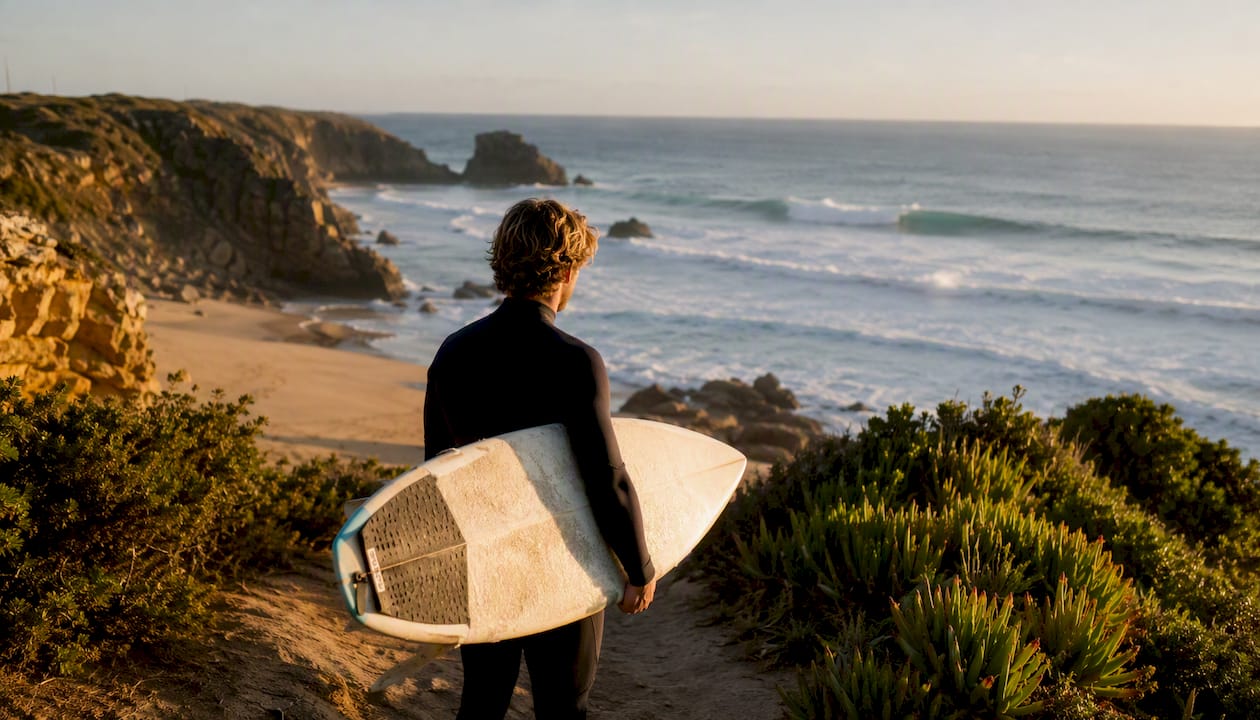
Praia da Areia Branca is a reliable, all-levels beach break worth surfing year-round when you match the right swell, wind, and tide. West to northwest swells with light offshore easterlies produce the cleanest waves, and the spot sits north of Lisbon and south of Peniche, making it a straightforward day trip or multi-day base., making it a straightforward day trip or multi-day base.
Before you go, check these three things:
Swell and wind: W to NW swell at 1.5–3 m with light easterly (offshore) wind. Avoid onshore westerlies.
Tide: Mid to falling tide grooms the sandbars into defined peaks. High and low tides can flatten or steepen sections.
Wetsuit: 4/3mm full suit from October through March; a 3/2mm works from April through May and September through October.
Lifeguards are on duty during summer months, and local amenities including showers, cafes, and parking are within short walking distance of the main breaks.
Key Takeaways
Areia Branca is a consistent, all-levels beach break that rewards surfers who check the tide, read the sandbars, and match their session to the swell direction and wind.
Point | Details |
Best conditions | W to NW swell, light easterly offshore wind, mid to falling tide for defined peaks. |
Wetsuit by season | 4/3mm from October through March; 3/2mm in spring and autumn. |
Skill-level match | Central beach suits beginners and intermediates; rivermouth and reef edge for advanced surfers. |
Forecast check | Use Surf-Forecast’s spot page and Mondo Surf webcam together before leaving home. |
Book lessons early | Riparsurfschool has operated locally since 2001; reserve 48 hours ahead in summer. |
Table of Contents
Where is Praia da Areia Branca and what’s the vibe?
Areia Branca sits on Portugal’s Silver Coast, in the municipality of Lourinhã, roughly 70 km north of Lisbon and about 12–15 km south of Peniche. From Lisbon, the A8 motorway gets you there in under an hour. From Peniche, it’s a 15-minute drive south on the N114.
The town itself is small and unhurried. There’s no resort strip, no crowds fighting for parking at 7 AM. The beach is a long, open sandy bay backed by low cliffs to the south, and those cliffs are genuinely useful: standing on them before a session gives you a clear view of where the peaks are breaking that day. The Surf Atlas guide specifically recommends this cliff check to locate the best banks before paddling out.
Compared with Peniche or Ericeira, Areia Branca runs at a slower pace. That’s a real advantage if you’re learning or just want a session without the shoulder-to-shoulder lineups that Supertubos draws on a good swell day.
Areia Branca surf guide: spot fundamentals and who should surf here
Areia Branca is a beach break with river-mouth influence at the southern end of the bay. The bottom is sand throughout, with some rocks and boulders near the rivermouth at certain tides and a reef area to the north. Sandbars shift seasonally, so the peak positions you find in October may look nothing like what’s there in March.
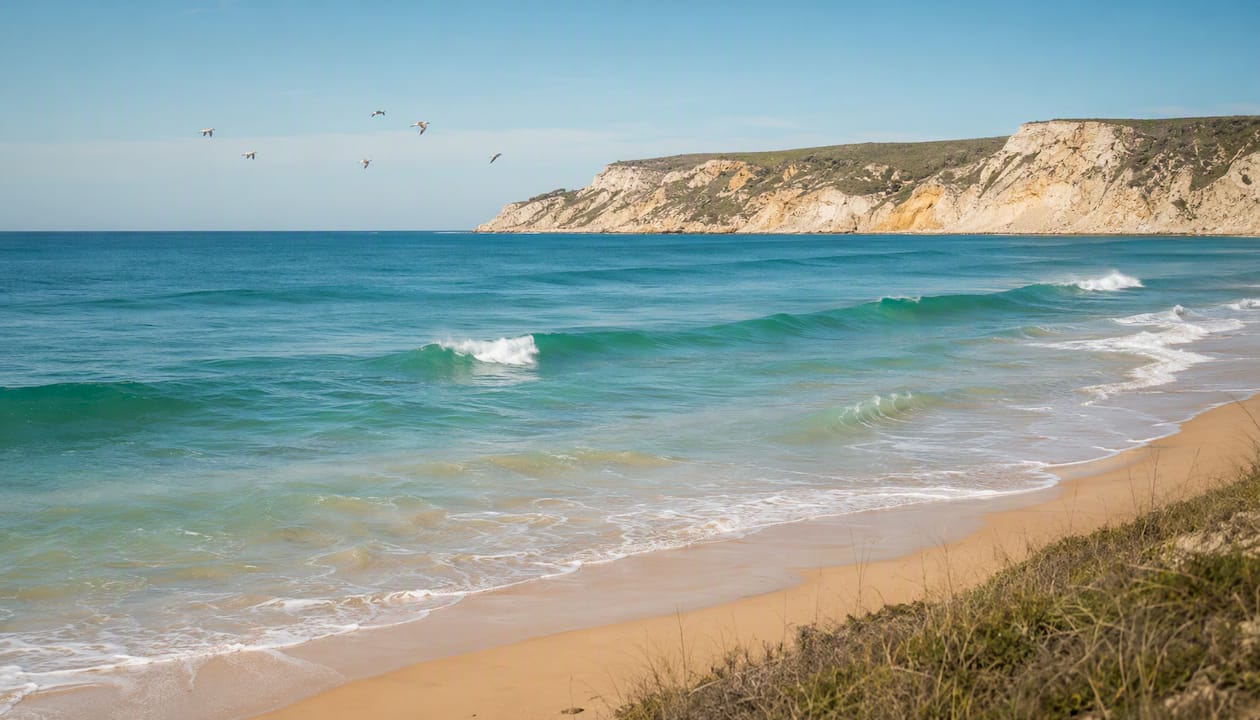
The spot works on NW, W, and SW swells. Offshore easterly winds are what you want: they hold the wave faces up and give you clean, defined lips. Onshore westerlies, which are common in summer, chop the surface and make sessions frustrating for anyone below intermediate level.
Water temperature and wetsuit guide:
Winter (October–March): 12–16°C. Wear a 4/3mm wetsuit, booties, and gloves on colder days.
Spring and autumn (April–May, September–October): 16–20°C. A 3/2mm is usually enough.
Summer (June–August): Water warms above 18°C. A 2mm shorty or thin 3/2mm works.
Skill levels: The central beach area suits beginners and intermediates on smaller days. The rivermouth and reef edges attract more experienced surfers looking for longer rides and punchier sections. Crowding is generally light compared with Peniche, though summer weekends bring more local families and learners to the water.
Pro Tip: Before paddling out, walk the beach or climb the southern cliffs to read where the sandbars are sitting. A five-minute observation saves you 20 minutes of paddling to a flat section.
Where to surf along the beach: main peaks and how they differ
The bay offers four distinct surfable stretches, each with its own character.
Central beach (main peak): The most accessible entry point, directly in front of the main parking area and facilities. Works on mid-size swells and suits beginners through intermediates. Peaks shift with the sandbars, so it’s worth a quick scan before committing.
Rivermouth area: The southern end of the bay where a small river meets the sea. When the sandbars align, this section delivers both lefts and rights with more shape than the central beach. The PortugalSurfSpots guide notes that the rivermouth can be particularly productive when NW and W swells push in. Watch for exposed rocks at lower tides.
Praia de Peralta: A quieter southern extension of the bay, accessible by a short walk or separate access road. Less consistent than the main beach but worth checking when the central peaks are crowded or poorly shaped. Sandbars here shift independently, so local knowledge or an on-site check matters.
Reef edge (north of the bay): A more exposed section that picks up swell earlier and produces faster, hollower waves. Best left to experienced surfers. At low tide, rocks become a real hazard.
Rip currents are most active near the rivermouth on bigger swell days. If you get caught, paddle parallel to shore rather than fighting directly back.
Parking for the central beach is straightforward. For Praia de Peralta, a separate access road runs south from the main town.
Best months and the ideal swell, wind, and tide setups
Winter brings the most consistent and powerful swells to Areia Branca, making it ideal for performance surfing and progression. Summer tends to be smaller and more forgiving, suitable for lessons and beginner camps.
Month | Typical Swell | Wind Pattern | Best For |
October–March | 1.5–3 m+ W/NW | Variable; offshore E possible | Intermediate to advanced; consistent practice |
April–May | 1–2 m W/NW | Lightening; some offshore days | All levels; good learning window |
June–August | 1.5 m mixed | Often onshore W | Beginners; lessons; family trips |
September | 1–2 m W/NW | Improving offshore frequency | All levels; uncrowded |
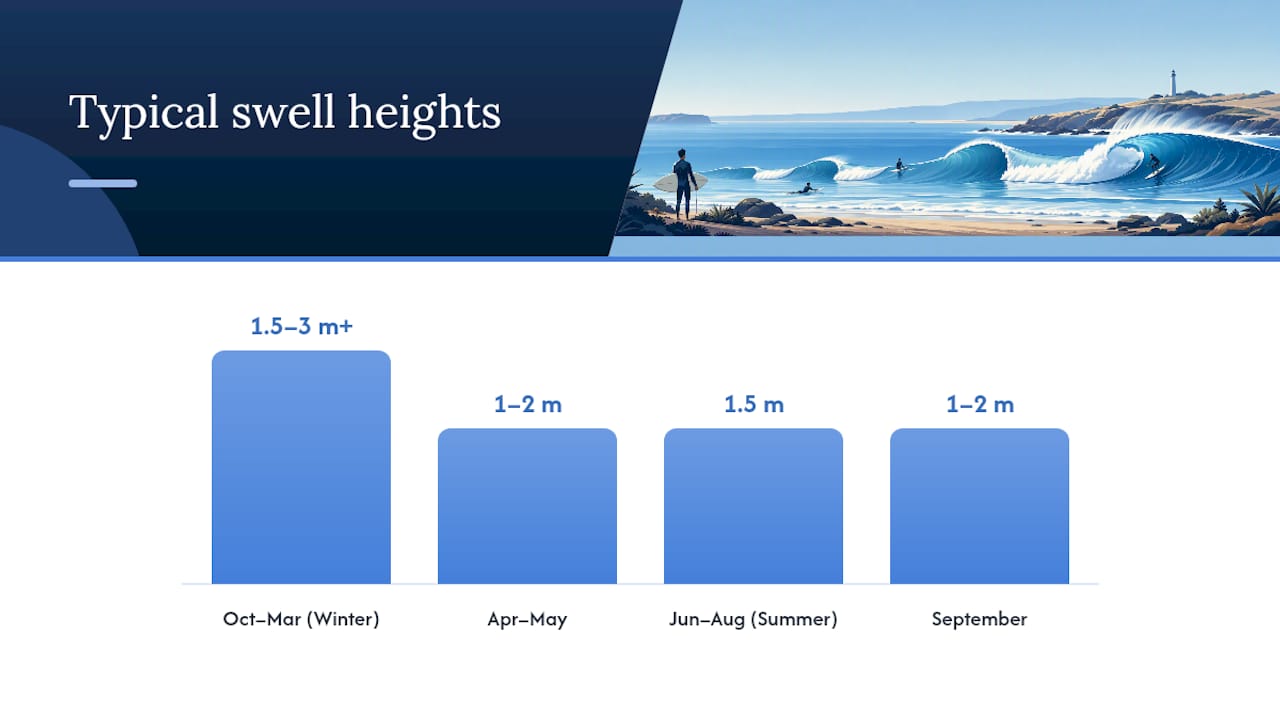
The ideal setup at any time of year: a W to NW swell at 1.5–2 m with a 10–14 second period, light easterly wind under 15 km/h, and a mid to falling tide. That combination grooms the sandbars into defined peaks with clean faces.
Pro Tip: A longer swell period (12 seconds or more) at the same height produces far more powerful and organized waves than a short-period wind swell. Check the period, not just the height, on your forecast app.
Safety, common hazards, and how to behave in the lineup
Areia Branca is forgiving on small days. On bigger swells, the same spot develops strong rip currents, faster sections, and exposed hazards that catch out surfers who underestimate it.
Rip currents: Most common near the rivermouth and at the northern reef edge on swells above 2 m. Identify them before entering: look for discolored, choppy water moving away from shore.
Rocks and boulders: The rivermouth area and the northern reef expose rocks at lower tides. Check tide times and do a visual scan from the beach first.
Shifting sandbars: A peak that was shoulder-high and clean at mid tide can become a close-out at low tide. Reassess conditions if you’ve been in the water more than an hour.
Lifeguards: On duty during summer months. Outside that window, you’re responsible for your own safety. Portugal’s emergency number is 112.
Lineup etiquette: Areia Branca has a relaxed local culture, but the standard rules apply. Don’t drop in on someone already riding a wave. Paddle wide around the lineup rather than through it. If you’re a beginner, stick to the whitewash or the less-crowded sections rather than sitting in the main peak. Locals notice and appreciate surfers who respect the space.
Pro Tip: If you’re unsure about conditions, ask at a local surf school before paddling out. Five minutes of local advice is worth more than any forecast app on an unfamiliar day.
Getting there, parking, facilities, and where to stay
Directions:
From Lisbon: Take the A8 north toward Torres Vedras, then follow signs for Lourinhã and Areia Branca. Total drive time is roughly 50–60 minutes.
From Peniche: Head south on the N114 for about 15 minutes.
Facilities on the beach:
Facility | Details |
Parking | Free public parking close to the main beach access |
Showers and restrooms | Available near the main beach area |
Cafes and restaurants | Several within short walking distance of the beach |
Surf schools | Multiple options, including Riparsurfschool on-site |
Accommodation | Hostels, surf houses, and a campsite in or near the town |
For multi-day surf trips, the Ripar Surf House is a practical base: it puts you within walking distance of the breaks and connects you directly with local instructors. A campsite near the beach suits travelers on tighter budgets who want to stay close to the water.
Where to check live forecasts and webcams for Areia Branca
Checking a generalized forecast misses the spot-specific detail that makes or breaks a session here. Use these resources instead:
Surf-Forecast: Hourly swell, wind, and tide tables specific to Areia Branca, plus sea temperature data. The most detailed free option for this spot.
Mondo Surf: Spot guide and webcam for Areia Branca. Useful for a real-time visual check of current conditions.
Surfline: Broader regional forecasts for the Silver Coast and Peniche area.
Tide tables: Cross-reference any Portuguese tide service (e.g., Instituto Hidrográfico) for exact local tide times.
How to read the numbers for this spot:
Prefer W to NW swell direction. SW can work but tends to produce less organized peaks.
Wind direction matters more than speed. Even 20 km/h easterly (offshore) is better than 10 km/h westerly (onshore).
Check the tide window. Mid to falling tide is the sweet spot for most sandbars.
Pro Tip: Mondo Surf’s webcam lets you see actual wave conditions before you leave home. Pair it with Surf-Forecast’s hourly table and you’ll rarely show up to a flat or blown-out beach.
Local surf schools, lessons, and gear rental
Riparsurfschool has been operating at Praia Areia Branca since 2001, making it one of the longest-established surf schools on this stretch of coast. The school offers group lessons, private lessons, multi-day surf camp packages with accommodation, and equipment rental. Instructors are locally certified and know the spot’s sandbank shifts and seasonal quirks better than any forecast app can replicate.
When choosing any school or rental at Areia Branca, look for:
Certified instructors (Portuguese Surf Federation or equivalent)
Student-to-instructor ratio of 6:1 or lower for group lessons
Equipment condition: boards without pressure dings, leashes without fraying, wetsuits that seal properly
Insurance and first-aid coverage on-site
Unsure whether to book a single lesson or a full camp? The surf camp vs. surf school comparison on the Riparsurfschool site walks through exactly that decision for Portugal-based trips.
Pro Tip: Book lessons at least 48 hours ahead in summer. Riparsurfschool’s calendar fills quickly in July and August. If you’re flexible on timing, mid-week slots in September offer smaller groups and often better swell.
Session plans for beginners, intermediates, and advanced surfers
Beginner plan
Check Surf-Forecast for a swell under 1.5 m with light or no wind.
Book a group surf lesson or arrive at the central beach at low to mid tide.
Start in the whitewash, well away from the main peak.
Pack: 7’6"+ softboard (provided by most schools), 4/3mm wetsuit in winter, leash, and reef-safe sunscreen.
Intermediate plan
Target a W/NW swell at 1–2 m with offshore easterly wind and mid to falling tide.
Check the rivermouth area for lefts and rights; if the banks are working, this section offers longer rides than the central beach.
Focus on one skill per session: bottom turns, cutbacks, or reading the peak earlier.
Pack: 6’4"–7’0" shortboard or mid-length, 3/2mm wetsuit in shoulder seasons, and a surf lesson planning guide if you want structured drills.
Advanced plan
Wait for a W/NW swell above 2 m with a period over 12 seconds and light offshore wind.
Check the reef edge to the north for hollow, faster sections. Do a visual hazard check for exposed rocks before entering.
Safety checklist: leash in good condition, someone on the beach aware of your session, knowledge of the rip exit routes.
Pack: 6’0"–6’4" shortboard, 4/3mm in winter, and a backup board if possible.
Why Areia Branca deserves more respect than it gets
Most surf travelers heading to central Portugal drive straight through Areia Branca on their way to Peniche. That’s understandable: Supertubos has a reputation that precedes it. But Areia Branca offers something Peniche rarely does on a good swell day: space to actually surf.
The spot’s beach-break nature means it rewards patience and observation more than raw ability. Watching the banks for 10 minutes before paddling out, timing the tide, reading the wind shift at dawn — these habits matter here more than at a predictable point break. That’s what makes it a genuinely good learning environment, and also what makes it satisfying for experienced surfers who want to work on their wave selection rather than just survive a crowd.
The river-mouth influence adds a layer of unpredictability that keeps the spot interesting across seasons. A bank that produces perfect lefts in November may be gone by February. That variability is frustrating if you show up without checking conditions, but it’s exactly what keeps the lineup from becoming a conveyor belt.
Riparsurfschool’s presence since 2001 reflects something real about this place: it’s a spot that rewards commitment and local knowledge over one-off visits.
Useful resources and live forecast pages
Resource | What it provides | When to use it |
Hourly swell, wind, tide tables, sea temp | Primary forecast check before every session | |
Live webcam and spot guide | Real-time visual conditions check | |
Sandbank and rivermouth detail | Planning trips and understanding peak shifts | |
Swell, tide, and skill-level breakdown | Trip planning and board selection | |
Crowding notes and multiple peak overview | Choosing between peaks on arrival | |
Lessons, camps, and rentals | Reserving a session or multi-day package |
Sources
Recommended
Comments